Best Walking Boots for Sprained Ankles (2026)
Key Takeaways
Best overall
Aircast AirSelect Standard
A semi-rigid, pneumatic boot with strong swelling control.
Best value
United Ortho Short Air Cam Walker
A well-reviewed, affordable, no-frills option.
Read this first: Walking boots are made for more severe sprains (grade 3), high ankle sprains, or an injury paired with a fracture — and are usually best worn on a clinician’s advice. Many mild-to-moderate sprains actually recover faster with a supportive brace and gentle early movement than with a rigid boot.
Not sure how bad it is? Get it assessed. If you can’t put weight through the ankle, or you have bony tenderness, numbness, or an obvious deformity, see a professional before you buy anything.
A sprained ankle is one of the most common musculoskeletal injuries there is — roughly a million ankle injuries are treated in U.S. emergency departments each year, and the large majority are sprains (AAFP; OrthoInfo/AAOS). Most happen when the foot rolls inward, stretching or tearing the ligaments on the outside of the ankle. If you’ve been told to use a walking boot — or you’re weighing one up — this guide covers the boots genuinely worth considering in 2026, who each one suits, and, just as importantly, when a boot is the wrong tool for the job.
What is the best walking boot for a sprained ankle?
For most people who genuinely need a boot, the Aircast AirSelect Standard is the best all-round choice: its semi-rigid shell and overlapping air cells provide firm protection plus adjustable compression to manage swelling. If budget matters more, the United Ortho Short Air Cam Walker delivers solid, no-frills support for far less. The right boot still depends on your injury — so have it graded first.
Do you actually need a walking boot for a sprained ankle?
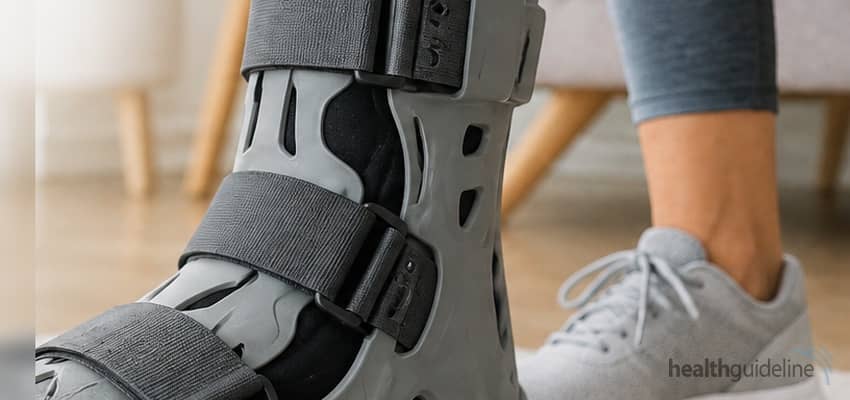
This is the question most buying guides skip, and it matters. A walking boot (also called a CAM walker, cast boot, or fracture boot) heavily limits ankle motion to protect healing tissue. That’s exactly what you want for a severe (grade 3) sprain, a high ankle (syndesmotic) sprain, or a sprain alongside a fracture — often for a short, defined period under a clinician’s guidance.
But for the mild-to-moderate (grade 1–2) sprains that make up most cases, the current evidence leans the other way. As the NIH’s StatPearls clinical review puts it, “early functional rehabilitation, rather than prolonged immobilization, promotes optimal recovery.” Locking a mild sprain in a rigid boot too soon can let the stabilizing muscles switch off and weaken, which may lengthen recovery and raise the risk of re-injury. A lighter, flexible ankle brace that supports the joint while still allowing controlled movement is often the smarter pick.
There’s a second, practical catch with boots: they raise one foot higher than the other and force a stiff, flat-footed gait. Over days and weeks that unevenness can strain the knee, hip, and lower back on the opposite side. It’s manageable — a shoe balancer on the other foot helps — but it’s a real reason not to stay in a boot longer than you need to. The bottom line: a boot is a treatment, not a purchase to self-prescribe. Get your sprain graded, and let the severity decide.
How we chose these walking boots
We focused on real products that are currently sold on Amazon (US) and that fit genuine ankle-sprain use cases — not whatever is easiest to link. We prioritized clinically sensible design (a supportive shell, a rocker sole for a smoother stride, adjustable compression, and a comfortable liner), a range of prices and heights so different injuries and budgets are covered, and honest trade-offs for each. Product availability, sizing, and price change constantly, so we link out to each live listing rather than quoting numbers that go stale. Always follow your own clinician’s advice on whether — and how long — to wear a boot.
Best walking boots for sprained ankles at a glance
| Walking boot | Best for | Standout feature | Approx. price* |
|---|---|---|---|
| Aircast AirSelect Standard | Best overall | Semi-rigid shell + duplex air cells for swelling control | Premium (~$100+) |
| United Ortho Short Air Cam Walker | Best value | Steel-reinforced uprights; up to ~300 lb; low cost | ~$45–60 |
| United Ortho Air Cam Walker (Tall) | Taller support / high ankle sprains | Higher shell for more lower-leg coverage | ~$50–70 |
| Aircast AirSelect Elite | Significant swelling | Extra posterior air cell for all-around edema control | Premium (~$120+) |
| Ovation Medical Gen 2 Pneumatic | Lightweight / low-profile | Lighter, lower-profile CAM walker | Mid-range (check Amazon) |
| Ossur Rebound Air Walker | Adjustable comfort | Pump-adjustable air with a cushioned rocker bottom | Premium (check Amazon) |
01 / Best overall
Aircast AirSelect Standard — Best overall
The AirSelect Standard is the boot most people should look at first. Its durable, semi-rigid open shell firmly protects the foot and ankle, while overlapping “duplex” air cells line the inside and let you dial in gentle, even compression to help control swelling. A rocker sole and shock-absorbing tread smooth out each step, and the universal design fits either foot. It’s the well-rounded, clinically-oriented choice for a serious sprain.
Key features:
- Semi-rigid full-shell protection
- overlapping air cells for adjustable compression
- rocker sole
- universal left/right fit.
Pros:
Excellent, adjustable swelling control; sturdy protection; smooth, supported gait.
Cons:
Premium price; taller and bulkier than a brace; like all boots, needs a shoe balancer on the other foot for longer wear.
Best for: Grade 2–3 sprains, post-injury swelling, or when a clinician wants firm immobilization.
02 / Best value
United Ortho Short Air Cam Walker — Best value
If you want dependable support without the premium price, this best-selling United Ortho boot is hard to beat. Plastic molded uprights reinforced with steel keep the ankle stable, a shock-absorbing insole and rocker sole ease each step, and built-in air bladders add a bit of custom compression and cushioning. It’s rated to roughly 300 pounds and fits either foot. Simple, sturdy, and inexpensive.
Key features:
- Steel-reinforced molded uprights
- air bladders for light compression
- shock-absorbing insole
- rocker sole
- supports up to ~300 lb
- universal fit.
Pros:
Great value; genuinely popular and widely reviewed; roomy footbed that accommodates swelling and bandages.
Cons:
A single continuous air chamber rather than separately targeted cells; liner and finish are more basic than premium boots.
Best for: Stable sprains and budget-conscious buyers who still want solid immobilization.
03 / Best for high ankle sprains
United Ortho Air Cam Walker (Tall) — Best for high ankle sprains
The taller sibling of the pick above, this boot rises higher up the lower leg for extra support and control. That added height helps when the injury sits higher than the ankle joint — such as a high (syndesmotic) ankle sprain or a lower-leg issue — where a short boot doesn’t restrict enough motion. It keeps the same steel-reinforced shell, rocker sole, and shock-absorbing insole.
Key features:
- Taller shell for more lower-leg coverage
- steel-reinforced uprights
- rocker sole
- shock-absorbing insole
- universal fit.
Pros:
More immobilization for higher injuries; strong value for a tall boot.
Cons:
Heavier and warmer than a short boot; more than you need for a simple low ankle sprain.
Best for: High ankle sprains, more severe injuries, or anyone advised to limit lower-leg movement.
04 / Best for significant swelling
Aircast AirSelect Elite — Best for significant swelling
The Elite is the AirSelect Standard with one meaningful upgrade: it adds a third air cell at the back of the boot (alongside the two side cells), giving more complete, all-around compression. If your ankle is badly swollen or the tender spot sits toward the rear of the foot, that posterior cell lets you support the area more precisely. Otherwise it shares the Standard’s semi-rigid shell, rocker sole, and shock absorption.
Key features:
- Three air cells (both sides plus posterior) for full compression
- semi-rigid shell
- rocker sole
- universal fit.
Pros:
Top-tier swelling management; targeted support at the rear foot; premium build.
Cons:
Most expensive option here; overkill unless swelling or rear-foot support is a real concern.
Best for: Severe sprains with a lot of swelling, or rear-foot involvement.
05 / Best lightweight, low-profile boot
Ovation Medical Gen 2 Pneumatic — Best lightweight, low-profile boot
Not everyone wants a heavy, bulky boot. The Ovation Medical Gen 2 is a lighter, lower-profile CAM walker with built-in air support, aimed at people who need protection but want something less cumbersome for day-to-day life. It’s a sensible middle ground between a full premium boot and the most basic models — supportive enough for many foot and ankle injuries without the extra weight.
Key features:
- Lightweight, low-profile shell
- pneumatic (air) support
- rocker sole.
Pros:
Easier to live in day-to-day; less bulk than premium boots; still offers real immobilization.
Cons:
Lower profile means slightly less rigid control than a tall boot; confirm sizing carefully.
Best for: Stable sprains where comfort and lower weight are priorities.
06 / Best for adjustable comfort
Ossur Rebound Air Walker — Best for adjustable comfort
Össur is a respected name in orthopedics, and the Rebound Air Walker focuses on comfort and a customizable fit. Compression straps plus an integrated air pump let you fine-tune the support around your ankle, and a cushioned rocker bottom keeps your stride as natural as a boot allows. It’s a premium alternative if the Aircast doesn’t fit your foot well or you simply prefer a pump-adjustable feel.
Key features:
- Air pump for adjustable support
- compression straps
- cushioned rocker bottom
- available in shorter and taller heights.
Pros:
Comfortable, dial-in fit; quality construction from a well-known brand.
Cons:
Premium price; heavier than low-profile boots.
Best for: Buyers who want a comfortable, adjustable premium boot as an Aircast alternative.
Consider a brace
If your sprain is mild: consider a brace instead
For a grade 1 or mild grade 2 sprain — or once you’re past the worst of a bigger one and easing back to activity — a slim ankle brace is often the better choice than a boot. It stabilizes the ankle and helps guard against rolling it again, while still letting the joint move and the surrounding muscles stay active. The Aircast A60 is a popular example: a low-profile brace with a molded stabilizer on each side (set at a 60° angle to resist the inward roll that causes most sprains) and a single quick strap. It fits inside most shoes.
Best for: Mild sprains, return-to-activity support, or chronic “weak ankle” instability.
Not for: Severe sprains or fractures that need rigid immobilization — those call for a boot and professional care.
Aircast A60 Ankle Support — view on Amazon (Choose the correct size and left/right foot before publishing)
What to look for when buying a walking boot
Short boot vs. tall boot
Short boots end below mid-calf and are enough for most foot and low ankle injuries; they’re lighter and easier to live in. Tall boots rise higher for more control and are used for higher ankle sprains, more severe injuries, or lower-leg problems. When in doubt, follow the height your clinician recommends.
Air (pneumatic) vs. foam
Pneumatic boots have inflatable cells you can adjust for a snugger fit and better swelling control — useful early on when the ankle is puffy. Foam-lined boots are simpler and often cheaper. If swelling is a big part of your injury, lean pneumatic.
Rocker sole and shock absorption
A curved “rocker” sole helps you roll through each step instead of walking flat-footed, which reduces strain and makes the boot far more comfortable over a day. A cushioned, shock-absorbing insole matters for the same reason.
Fit, sizing, and weight capacity
Boots are usually universal (either foot) and sized by shoe size, but ranges differ by brand — measure and check the size chart, and size up if you have swelling or wear bandages. If you’re near a listed weight limit, choose a boot rated for it (several here support up to about 300 pounds).
Don’t forget the other foot
Because a boot lifts one side higher, walking in it can throw off your hips and back. An inexpensive shoe balancer (an “EVENup”-style leveler) on the opposite shoe evens out your stride and helps prevent that secondary ache. A spare sock liner also keeps the boot fresher.
How to use a walking boot safely
Wear the boot for the activities and length of time your clinician advises, and resist the urge to do more just because it feels supportive — the injury is still healing underneath. Loosen or remove it for bathing and sleeping only if you’ve been told that’s okay. Watch the rest of your body, too: because your ankle isn’t bearing weight normally, extra load lands on your knees, hips, and lower back, so build in rest. And plan for the transition — moving out of a boot into a brace and gentle rehab, when your clinician clears it, is a normal and important part of recovery. For more on timelines, see our guide to ankle sprain recovery time, and for early self-care basics, the RICE protocol.
When to see a professional
An ankle sprain can look and feel like a fracture, so it’s worth getting checked — especially if any of these apply. See a healthcare professional promptly if you:
- Can’t bear weight or take more than a few steps right after the injury.
- Have tenderness directly over the ankle bones (clinicians use the “Ottawa ankle rules” to decide whether an X-ray is needed).
- Notice numbness, tingling, a cold or pale foot, or an obvious deformity.
- Have severe pain or swelling, or heard a loud “pop” at the moment of injury.
- See no improvement after a week or two of sensible self-care, or the ankle keeps giving way.
- Develop calf pain, warmth, or swelling out of proportion to the injury (which can signal a blood clot and needs urgent attention).
A clinician can grade the sprain, rule out a fracture, and tell you whether a boot, a brace, or something else is right — and for how long. This article is general information, not medical advice.
Frequently asked questions
How long should you wear a walking boot for a sprained ankle?
It depends on severity and should be set by your clinician. As a rough guide, a severe (grade 3) sprain might need a boot for only about a week to ten days before transitioning to a brace, while milder sprains may not need a boot at all. Injuries involving a fracture usually require several weeks.
Can you walk normally in a walking boot?
Not quite normally. A boot lets you bear weight and get around, but it deliberately stiffens the ankle, so your stride is flatter and slower. A rocker sole helps you roll through each step. Because the boot also raises one foot, adding a shoe balancer to the other side makes walking more even and comfortable.
Walking boot vs. ankle brace for a sprain — which is better?
Neither is universally “better”; it depends on severity. A boot gives rigid protection for severe sprains, high ankle sprains, or fractures. A brace gives lighter support that still allows movement, which suits mild-to-moderate sprains and return-to-activity, since early functional movement often speeds recovery. Have your injury graded and let that decide.
Should you wear a walking boot to bed?
Usually you can take the boot off to sleep unless your clinician specifically tells you to keep it on — for example, with certain fractures or after surgery. Removing it at night can be more comfortable and lets the skin breathe. Always follow the specific instructions you were given for your injury.
Can a walking boot make an ankle sprain worse?
A boot won’t worsen the ligament injury, but wearing one longer than needed for a mild sprain can weaken the stabilizing muscles and slow recovery, and its uneven gait can strain the knee, hip, and lower back. That’s why boots are best reserved for more severe injuries and worn only as long as advised.
What size walking boot should I get?
Most boots are universal (either foot) and sized by your shoe size, but ranges vary by brand, so always check the specific size chart. If your ankle is swollen or you wear bandages, or you’re between sizes, sizing up usually gives a better, more comfortable fit. Confirm the current sizing on the product page before buying.
Medical disclaimer: This article is for general information only and is not medical advice. Talk to a qualified healthcare professional about your specific situation, including whether a walking boot or brace is appropriate for your injury and how long to use it.