Best Knee Sleeves for CrossFit: 5 Picks for 2026
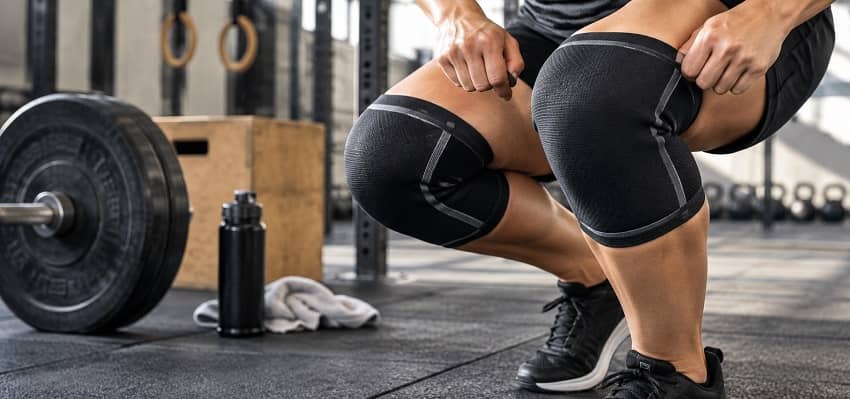
2026 CrossFit gear guide · mobility, warmth & lifting support
The best knee sleeves for CrossFit balance compression and warmth with enough freedom to move through a mixed workout. For most WODs, a 5–6 mm neoprene sleeve is the more versatile starting point than a dense 7 mm model because it is easier to keep on through squats, Olympic lifts, lunges, box work and conditioning. Among the Amazon-focused options we verified, our top overall pick is the Element 26 6mm Knee Sleeves; athletes who prefer a classic 5 mm design should also compare Rehband RX 5mm and Gymreapers 5MM.
Quick picks
Best overall
Element 26 6mm
A useful middle ground between flexible 5 mm sleeves and stiffer 7 mm models for mixed-modal training.
Premium 5 mm
Rehband RX 5mm
An anatomically shaped, four-panel sleeve built for athletes who want compression without giving up deep knee flexion.
Heavy strength days
Iron Bull 7mm
A thicker pair for squat-heavy sessions when support matters more than all-WOD flexibility.
JUMP TO A SECTION
How we chose the best knee sleeves for CrossFit
We treated this as a CrossFit-specific buying guide rather than a generic powerlifting list. We prioritized neoprene thickness, freedom of movement, construction, sizing clarity, whether a pair or single sleeve is sold, and suitability for mixed sessions that may combine squats, Olympic lifting and conditioning. Product specifications were checked against current manufacturer pages, and the shortlist was cross-checked against recent independent testing and roundups.
These category labels are editorial judgments based on product construction and the demands of mixed training; they are not results from our own lab or head-to-head performance test. For broader options, see our knee compression sleeve guide and knee sleeves for running guide.
Best CrossFit knee sleeves at a glance
| Knee sleeve | Our category | Thickness | Approx. retail* | Main tradeoff |
|---|---|---|---|---|
| Element 26 | Best overall for mixed WODs | 6 mm | Around $60 / pair | More compression than some athletes want for long conditioning pieces |
| Rehband RX | Premium 5 mm option | 5 mm | Around $75 / pair on Rehband site | Costs more than value-focused pairs; confirm Amazon quantity |
| Gymreapers | 5 mm hybrid-training pick | 5 mm | Around $50 / pair | Less rigid than a strength-focused 7 mm sleeve |
| Bear KompleX | Longer-coverage option | 5 mm or 7 mm | Around $55 / pair | Longer cut can feel like more material during fast sessions |
| Iron Bull | Best for heavy strength days | 7 mm | Around $85 / pair | Less WOD-friendly if you run, jump and move continuously |
Short version: Choose 5–6 mm if your week is truly mixed. Move to 7 mm when your priority is heavy squatting or strength-biased sessions and you are comfortable trading some flexibility for a denser sleeve. *Approximate retail prices above were checked on manufacturer pages in September 2026; Amazon prices and variants can differ and change.
The five best knee sleeves for CrossFit
01 / BEST OVERALL
Element 26 6mm Knee Sleeves
Element 26’s 6 mm sleeve is our best all-around choice for mixed CrossFit training in this Amazon-focused shortlist. It is thicker than a conventional 5 mm sleeve but still designed around mobility, with a 25-degree anatomical offset and reinforced seams. That makes it a sensible one-pair choice when your training regularly mixes barbell work with lunges, pistols, burpees or other deep-flexion movements.
Element 26 6mm Knee Sleeves — view on Amazon
Key features
- 6 mm neoprene construction
- 25-degree offset anatomical contour
- Reinforced multi-crossed thread pattern
- Sold as a pair
Pros
- Good middle ground for strength and conditioning
- Contoured shape is intended to reduce bunching behind the knee
- Pair packaging keeps the purchase straightforward
Cons
- Can feel more compressive than a 5 mm sleeve
- Only one thickness in this model
- Fit still depends on careful measurement
Best for: Athletes who want one pair for a normal mix of lifting and metcons. Not ideal for: Someone who wants the lightest sleeve for running-heavy WODs or the stiffest sleeve for maximal squat work.
02 / PREMIUM 5 MM
Rehband RX Knee Sleeve 5mm
The Rehband RX 5mm is a long-established option for athletes who prioritize movement quality and anatomical fit. Rehband uses a four-panel, pre-shaped construction with 5 mm SBR/neoprene, and the current product is explicitly positioned for CrossFit, functional fitness, weightlifting and HIIT. It is the premium pick here when a flexible 5 mm sleeve is your priority.
Rehband RX Knee Sleeve 5mm — view on Amazon
Key features
- 5 mm SBR/neoprene
- Patented anatomical shape
- Four-panel construction
- Fits either knee
Pros
- 5 mm thickness is well suited to mixed training
- Pre-shaped design follows the knee through deep flexion
- Wide current size range from XXS to XXL on the manufacturer site
Cons
- Premium pricing compared with many pairs
- Quantity can vary by retailer or listing
- 5 mm will feel less bracing than a dense 7 mm sleeve on maximal squat days
Quantity check: Rehband currently sells the RX 5mm as either a pair or a single piece on its own site. Amazon variants may differ, so confirm that you are ordering the quantity and size you expect.
Best for: CrossFitters who want a proven 5 mm sleeve and are willing to pay more for a shaped construction. Not ideal for: Buyers who mainly want maximum 7 mm stiffness or the lowest cost per pair.
For more brand-specific context, see our Rehband knee sleeve guide.
03 / 5 MM HYBRID-TRAINING VALUE
Gymreapers 5MM Knee Sleeves
Gymreapers’ 5 mm sleeves are designed for hybrid training where support and mobility both matter. The construction uses 5 mm SBR laminated neoprene, contoured panels, reinforced seams and bound edges. For CrossFit athletes who need full knee flexion across varied movements, this thickness is the more versatile Gymreapers option than a dense 7 mm sleeve.
Gymreapers 5MM Knee Sleeves — view on Amazon
Key features
- 5 mm SBR laminated neoprene
- Contoured ergonomic panels
- Reinforced seams and bound edges
- Sold as a pair
Pros
- 5 mm thickness suits dynamic training better than the brand’s 7 mm model
- Durability-focused seam and edge construction
- Sold as a pair with a one-year manufacturer warranty
Cons
- Less rigid than a 7 mm sleeve for strength-first training
- Hand-wash care is less convenient than machine-washable options
- May not satisfy athletes who specifically want a stiff squat-day sleeve
Best for: Athletes who want a straightforward 5 mm pair for hybrid training and prefer a durability-oriented construction. Not ideal for: Someone whose priority is a heavily compressive 7 mm competition-style sleeve.
04 / LONGER COVERAGE
Bear KompleX Knee Sleeves
Bear KompleX is the most flexible choice in this list if you want the same sleeve family in either 5 mm or 7 mm. The company specifically positions 5 mm for metcons, WODs and mixed sessions, while 7 mm is aimed at heavier squats and low-rep strength. The cut is longer through the thigh and calf, which may suit athletes who dislike short sleeves creeping down.
Bear KompleX Knee Sleeves — view on Amazon
Key features
- 5 mm and 7 mm options
- Longer cut through thigh and calf
- Contoured neoprene construction
- Sold as a pair
Pros
- Choose 5 mm for mixed sessions or 7 mm for heavier training
- Longer coverage may help athletes whose short sleeves slide down
- Pair packaging
Cons
- Longer material can feel warmer during long metcons
- You must select the correct thickness as well as size
- Hand-wash and air-dry care
CrossFit pick: Start by comparing the 5 mm option. Choose the 7 mm version only if your training is meaningfully strength-biased and you know you prefer a denser sleeve.
Best for: Athletes who prefer more leg coverage or want one product family with both 5 mm and 7 mm options. Not ideal for: Anyone who wants the least material possible around the knee.
05 / HEAVY STRENGTH DAYS
Iron Bull Strength 7mm Knee Sleeves
Iron Bull’s 7 mm sleeves are the strength-biased option for CrossFitters whose training includes frequent heavy squats and Olympic lifting. They use 7 mm SCR neoprene, an approximately 29 cm (11.5 in) length, double-stitched seams and an anti-slip grip, and they are sold as a pair. The tradeoff is straightforward: the extra thickness can be more cumbersome during running, high-rep gymnastics and long conditioning pieces.
Iron Bull Strength 7mm Knee Sleeves — view on Amazon
Key features
- 7 mm SCR neoprene
- Approximately 29 cm (11.5 in) sleeve length
- Double-stitched seams
- Sold as a pair
Pros
- More substantial feel for heavy squat work
- Durability-focused double-stitched construction
- Major lifting-federation approvals listed by the manufacturer
Cons
- 7 mm is more material than most athletes need for long metcons
- Can be harder to pull on and off than a looser 5 mm sleeve
- Strength-first choice rather than an all-day WOD sleeve
Best for: CrossFit athletes who use sleeves mostly on squat-heavy or Olympic-lifting days. Not ideal for: Athletes who want to leave sleeves on through running, box jumps and long high-rep conditioning.
If your training is closer to powerlifting than CrossFit, our SBD knee sleeve guide is also worth reading.
What should you look for in CrossFit knee sleeves?
For CrossFit, the best sleeve is usually the one you can keep moving in. Thickness matters, but so do contour, length, sizing and how the sleeve behaves in deep flexion. A sleeve that feels perfect for a heavy back squat may be annoying during burpees or running, so buy for the sessions you actually do most often.
Is 5 mm or 7 mm better for CrossFit?
Five millimeters is the more versatile default for mixed CrossFit training; seven millimeters suits strength-biased days. A 5 mm sleeve generally bends more easily through squats, lunges, running and gymnastics. A 7 mm sleeve gives a denser, more supportive feel but can become hot or restrictive during long WODs. Six millimeters sits between the two.
How much compression should a knee sleeve provide?
The sleeve should feel secure without causing numbness, tingling, pain, skin discoloration or a cold foot. Do not size down aggressively just to create more compression. Use the exact brand’s measurement instructions because brands measure at different points around the knee or calf.
Does sleeve length matter?
Longer sleeves cover more of the thigh and calf and may stay in place better for some body shapes, but they also add warmth and material. Shorter sleeves can feel less intrusive during fast conditioning. If you have large calves or thighs, compare the brand’s full size chart rather than choosing from knee circumference alone.
Knee sleeves vs. knee braces: what is the difference?
A neoprene lifting sleeve mainly provides compression, warmth and tactile feedback; it is not the same as a brace designed to restrict or control joint motion. If you need a device after an injury or for diagnosed instability, start with clinical advice rather than buying a lifting sleeve based on thickness. Our knee brace guide explains the broader product category.
Do not use a tight lifting sleeve to mask new knee pain. A sleeve can change how the knee feels during training, but it does not identify the cause of pain or make an injured knee ready for heavy loading.
How do you size knee sleeves for CrossFit?
Measure exactly where the manufacturer tells you and choose a snug, non-restrictive fit. Do not assume a medium in one brand equals a medium in another. If you are between sizes, read the brand’s guidance rather than automatically sizing down, especially if you want to wear the sleeves through long mixed sessions.
- Use a flexible tape. Measure the knee or calf at the location shown on the exact brand’s chart.
- Keep your measurement method consistent. Some brands specify a straight leg; others use a slight bend or a point below the kneecap.
- Test a full squat. A proper sleeve should stay in place without creating a painful fold behind the knee.
- Check circulation and skin. Remove or loosen the sleeve if you develop numbness, tingling, unusual color change, marked swelling or a cold foot.
- Follow the care label. Neoprene can trap sweat and odor; many lifting sleeves require hand washing or air drying, while some models permit machine washing.
When should knee pain be checked by a professional?
Stop treating the problem as a gear issue if the knee cannot bear weight, is badly swollen, feels unstable, will not fully bend or straighten, or is visibly deformed. Mayo Clinic also advises medical evaluation for severe injury-related pain, redness and warmth, or knee pain that interferes with normal daily activities.
A sleeve is not a diagnosis
Knee pain can come from many causes, and the right response depends on the injury or condition. If pain is worsening, recurrent, associated with swelling or instability, or changes how you move, get qualified medical or sports-medicine advice before using a sleeve to keep training.
Frequently asked questions
What are the best knee sleeves for CrossFit?
For most mixed CrossFit training, we prefer a flexible 5–6 mm neoprene sleeve rather than a very stiff 7 mm model. Element 26 6mm is our best overall pick, with Rehband RX 5mm and Gymreapers 5MM as strong alternatives. Choose 7 mm mainly when heavy strength work is your priority.
Are 7mm knee sleeves too thick for CrossFit?
Not always, but they can be more sleeve than you want for long mixed WODs. Seven-millimeter neoprene tends to feel denser and warmer, which many athletes like for heavy squats and Olympic lifting. If your sessions include running, burpees, lunges and gymnastics, a 5–6 mm sleeve is usually the more versatile starting point.
Should beginners wear knee sleeves for CrossFit?
Knee sleeves are optional, not required equipment. A beginner can train without them while learning movement quality, scaling and load management. If you like the warmth or compression, choose a comfortable fit, but do not use a sleeve to push through new pain or to compensate for technique that needs coaching.
How tight should CrossFit knee sleeves be?
They should be snug enough to stay in place but not so tight that they cause pain, numbness, tingling, skin discoloration or changes in foot temperature. Follow the manufacturer’s measurement chart for the exact model. A deliberately undersized competition fit is not automatically a good choice for long, high-rep CrossFit sessions.
Can knee sleeves prevent CrossFit injuries?
No sleeve can guarantee injury prevention. Neoprene sleeves can provide compression, warmth and a feeling of support, but injury risk also depends on training load, technique, fatigue, recovery and individual health. If you have persistent or worsening knee symptoms, treat that as a medical or programming question rather than relying on thicker gear.
Can you wear knee sleeves for an entire WOD?
You can if the sleeves remain comfortable and do not interfere with movement or circulation, but there is no rule that they must stay on. Many athletes prefer lighter 5 mm sleeves for all-WOD use and reserve thicker 7 mm sleeves for strength work. Remove them if they cause pain, numbness, slipping or excessive bunching.
This article is for general information only and is not medical advice. Talk to a qualified healthcare professional about persistent pain, a new injury, or whether knee sleeves are appropriate for your situation.