The 6 Best Patellar Tendonitis Braces for Jumper’s Knee (2026)
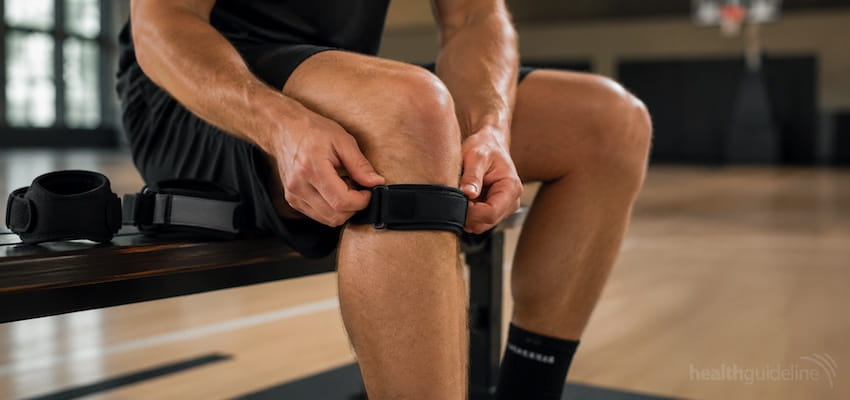
For most cases of patellar tendonitis (jumper’s knee), a patellar tendon strap worn just below the kneecap gives the most targeted relief and is the most affordable option. The Mueller Jumper’s Knee Strap is our top overall pick. Choose a compression sleeve for all-day warmth and light support, or a full brace with side stabilizers if your knee also feels unstable.
Our Top Patellar Tendonitis Picks
Best overall
Mueller Jumper’s Knee Strap
Targeted below-kneecap pressure from a trusted 60-year sports-medicine brand, at a budget price.
Best value
Bodyprox Patella Tendon Knee Strap (2-Pack)
Two adjustable straps, so you can support both knees or keep a spare.
Best for added stability
NEENCA Professional Knee Brace
Compression sleeve with a patella gel pad and side stabilizers for knees that also feel wobbly.
That sharp, pinpoint ache just below your kneecap when you jump, run, squat, or climb stairs is the classic sign of patellar tendonitis. The right brace can take a surprising amount of load off the irritated tendon so you can stay active while it settles. For most people, a simple strap worn just below the kneecap is the most targeted and affordable choice — but sleeves and full braces each have their place. Below are six real, currently-available options matched to different needs and budgets.
A brace is one piece of the puzzle, not a cure. If you’re not sure what’s going on with your knee, or the pain is severe, it’s worth reading our overview of patellar tendon straps for the knee and speaking with a clinician before you buy.
JUMP TO A SECTION
How we chose these patellar tendonitis braces
We compared current top-selling and well-reviewed options on Amazon against the things that actually matter for jumper’s knee: targeted support for the patellar tendon just below the kneecap, adjustability for a secure fit, breathable, skin-friendly materials for longer wear, and honest value. We prioritised designs recommended for patellar tendonitis by manufacturers and clinicians, cross-referenced buyer feedback, and grounded the guidance in medical sources such as the Mayo Clinic and Cleveland Clinic. We haven’t lab-tested every unit; picks reflect published specifications, verified availability, and real-world reviews. Prices shift constantly, so we link to the live listing rather than quote a number that will be out of date next week.
Best patellar tendonitis braces at a glance
| Brace | Type | Best for | Standout feature |
|---|---|---|---|
| Mueller Jumper’s Knee Strap | Single strap | Best overall | Tubular buttress for focused pressure |
| Bodyprox Patella Tendon Strap (2-Pack) | Single strap ×2 | Best value | Two straps; vented for airflow |
| McDavid Knee Band / Patella Strap | Single strap | Multi-sport athletes | Neoprene, non-slip buttress |
| Bodyprox Dual Patellar Strap | Dual strap | Pain above & below the kneecap | Upper + lower straps target quad and tendon |
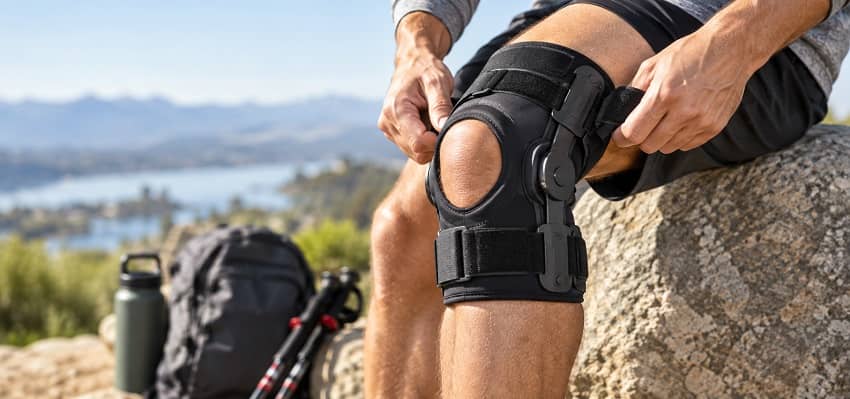
| NEENCA Professional Knee Brace | Sleeve + stabilizers | Added stability / all-day wear | Patella gel pad + side spring stabilizers |
| Sparthos Knee Compression Sleeves (Pair) | Compression sleeve | Mild all-day support & warmth | Lightweight, anti-slip pair |
01 / BEST OVERALL
Mueller Jumper’s Knee Strap
The Mueller Jumper’s Knee Strap is the option we’d hand most people first. It’s a single adjustable band with a tubular insert that presses on the patellar tendon just below the kneecap, redistributing some of the load off the sore spot during running and jumping. It’s low-profile, fits under clothing, and comes from a sports-medicine brand that’s been around for decades — all at a budget price.
Key features
- Tubular buttress for focused, uniform pressure
- hook-and-loop closure
- one-size-fits-most (roughly 10″–22″ around the knee)
- fits either knee.
Pros
- Very affordable
- targeted below-kneecap support
- slim and discreet
- trusted brand.
Cons
- Single strap only (no spare)
- minimalist — offers targeting, not all-around knee stability
- one-size fit may be loose on very small legs or snug on larger ones.
Best for: Mild-to-moderate jumper’s knee during specific activities — basketball, volleyball, running, hiking.
02 / BEST VALUE
Bodyprox Patella Tendon Knee Strap (2-Pack)
If you want the best cost-per-strap, the Bodyprox 2-Pack is hard to beat. You get two adjustable patellar straps for roughly the price many brands charge for one, which means you can support both knees, keep one in your gym bag, or simply have a backup when the first is in the wash. The band is reinforced with hexagonal venting holes to release heat during activity.
Key features
- Two straps per pack
- compression pad that sits over the patellar tendon
- two hook-and-loop straps per band for a customizable hold
- breathable vented design.
Pros
- Excellent value
- good for bilateral knee pain
- slim, non-bulky
- secure double-strap fastening.
Cons
- Basic single-point support (not a stabilizing brace)
- one-size design
- from a smaller brand than Mueller or McDavid.
Best for: Anyone who wants a spare, needs support on both knees, or is buying on a budget.
03 / BEST FOR MULTI-SPORT ATHLETES
McDavid Knee Band / Patella Strap
McDavid is a serious name in sports protection, and its patella strap is built for the field and court. A semi-tubular, non-slip buttress sits in a neoprene band and applies constant compression to the tendon, while the neoprene adds a little warmth. Buyers use it across running, basketball, tennis, soccer, pickleball, and more — it’s designed to stay put when you’re moving hard.
Key features
- Neoprene band with non-slip tubular buttress
- adjustable hook-and-loop closure
- one-size, fits left or right knee
- marketed for patellar tendonitis, runner’s knee and Osgood-Schlatter.
Pros
- Grippy, stays in place during dynamic sport
- well-known athletic brand
- slightly warmer neoprene feel.
Cons
- Neoprene can feel warm in hot weather or on long wear
- targeted support only
- single unit.
Best for: Active athletes who need a strap that won’t migrate mid-game.
04 / BEST FOR PAIN ABOVE AND BELOW THE KNEECAP
Bodyprox Dual Patellar Tendon Support Strap
Not everyone’s pain sits neatly below the kneecap. This dual-strap design places one band below the knee over the patellar tendon and a second above the knee across the lower quad, spreading pressure across both sides of the joint. It’s a good middle ground for people who feel strain above and below the kneecap but don’t want the bulk of a full brace.
Key features
- Upper and lower compression straps
- adjustable hook-and-loop on both
- two size options
- slim wrap-around profile.
Pros
- Support above and below the kneecap
- still lightweight
- more coverage than a single strap.
Cons
- Slightly more to put on and adjust than one band
- more material against the skin
- not a substitute for a stabilizing brace in unstable knees.
Best for: Combined patellar-tendon and lower-quad discomfort; those who found a single strap not quite enough.
05 / BEST FOR ADDED STABILITY
NEENCA Professional Knee Brace
When your knee feels not just sore but a bit unstable, a strap alone may not be enough. The NEENCA Professional Knee Brace is a pull-on compression sleeve with an anatomically contoured gel pad that cups the kneecap and dual side spring stabilizers that support the joint laterally. It’s one of Amazon’s longest-running best-selling knee braces and is typically FSA/HSA-eligible. It gives all-around support and warmth while still keeping the tendon area cushioned.
Key features
- Compression sleeve with open-patella gel pad
- removable/side spring stabilizers
- breathable knit with anti-slip strips
- sized by measurement.
Pros
- All-around support plus patellar cushioning
- helps with general knee reassurance and swelling
- breathable
- often FSA/HSA-eligible.
Cons
- Pricier than a strap
- you pull it over the foot, which can be awkward with a very stiff knee
- more coverage/warmth than some want for mild cases
- get the sizing right (measure first).
Best for: People who want daily support, mild swelling relief, and extra lateral stability alongside patellar cushioning.
06 / BEST SIMPLE COMPRESSION SLEEVE
Sparthos Knee Compression Sleeves (Pair)
A plain compression sleeve won’t apply the pinpoint below-kneecap pressure a strap does, but it offers gentle all-over compression and warmth that many people find soothing for mild, day-long knee ache — and this Sparthos set comes as a pair. It’s thin enough to layer under a strap on tougher days and comfortable for everyday wear, walking, or light training.
Key features
- Seamless knit sleeve
- silicone anti-slip strips to stop it rolling
- lightweight, breathable
- sold as two sleeves.
Pros
- Comfortable all-day warmth and light compression
- pair included
- layers well under a patellar strap
- very easy to wear.
Cons
- No targeted patellar-tendon pressure and no rigid stabilizers
- least specific option for jumper’s knee on its own
- must pull over the foot.
Best for: Mild cases, general knee warmth, or pairing with a strap for extra comfort.
How to choose a patellar tendonitis brace
The three types above suit different situations. Matching the brace to your severity matters more than picking the most expensive option — and over-bracing a mild case can let the surrounding muscles do less work than they should while you recover.
Strap, sleeve, or full brace?
A patellar strap is the most specific tool for jumper’s knee: it’s compact, cheap, and applies focused pressure right on the tendon during activity — ideal for mild to moderate pain that flares with sport. A compression sleeve gives all-day warmth and light, even support and suits mild lingering aches. A full brace with side stabilizers adds lateral support for knees that feel unstable or are recovering from more than simple tendonitis. Many people own a strap for training and a sleeve for daily wear.
Fit and placement
A strap should sit just below the kneecap, directly over the tender tendon — not on the kneecap itself. It should feel snug enough to stay put and apply pressure, but never so tight that it throbs, tingles, or cuts off circulation. For sleeves and braces, measure your knee (or leg) and follow the maker’s size chart rather than guessing; a sleeve that’s too big won’t compress, and one that’s too small will roll.
Material and comfort
Neoprene adds warmth and a secure feel but runs hotter; knit and mesh fabrics breathe better for long or warm-weather wear. Look for adjustable hook-and-loop closures, anti-slip strips or buttresses so it doesn’t migrate, and skin-friendly, machine- or hand-washable materials if you’ll wear it often.
About patellar tendonitis (jumper’s knee)
Patellar tendonitis — often called jumper’s knee — is an overuse injury of the patellar tendon, the band that connects your kneecap (patella) to your shinbone (tibia) and works with your thigh muscles to straighten the knee. Repeated jumping, running, and rapid changes of direction create tiny stresses in the tendon; when the load outpaces the tendon’s repair, it becomes painful and stiff, usually right below the kneecap. It’s most common in basketball and volleyball players but can affect anyone, per the Mayo Clinic.
A brace helps by supporting and offloading the tendon — the Mayo Clinic notes that strapping or taping can take pressure off the patellar tendon and may help relieve pain — but it treats the symptom, not the underlying tendon. Recognised care usually combines relative rest, reducing the activities that aggravate it, and physical therapy focused on gradually strengthening the quadriceps (eccentric exercises in particular), according to the Cleveland Clinic. A brace buys comfort and protection while that plan does the deeper work. If your pain overlaps with related conditions, our guides to Osgood-Schlatter knee braces, knee braces for chondromalacia, and quadriceps tendinitis braces may help too.
When to see a professional
A brace is for everyday support, not diagnosis or treatment of a serious injury. See a doctor or physical therapist if your knee pain is severe, keeps you from daily activities, or doesn’t improve with rest — and seek prompt care if you notice significant swelling or redness, the knee gives way or can’t bear weight, you can’t straighten it, or you felt a sudden pop (which can signal a tendon tear). As Johns Hopkins Medicine notes, jumper’s knee can resemble other problems, so always see your healthcare provider for a diagnosis. This article isn’t medical advice.
Frequently asked questions
What is the best brace for patellar tendonitis?
For most people, a patellar tendon strap worn just below the kneecap is the best starting point — it’s targeted, low-profile, and inexpensive. Our overall pick is the Mueller Jumper’s Knee Strap. If your knee also feels unstable or you want all-day support, a compression sleeve or a brace with side stabilizers like the NEENCA is a better fit.
Do knee straps actually work for jumper’s knee?
Many people get real relief from them. A strap sits below the kneecap and changes how the tendon is loaded, shifting some force away from the sore fibres during activity. The Mayo Clinic lists strapping and taping among techniques that can take pressure off the patellar tendon and help relieve pain — most effective as one part of a plan that includes rest and strengthening.
Where exactly should a patellar tendonitis strap sit?
Place the strap around your leg just below the kneecap, with the pad or buttress directly over the tender patellar tendon — not on the kneecap itself. Tighten it so it’s snug and stays put and you feel gentle pressure, but not so tight that it throbs, tingles, or restricts blood flow. It should feel supportive, never painful.
Should I wear a knee brace for patellar tendonitis all day?
Usually you wear it during the activities that trigger pain, or when your knee is bothering you — not necessarily around the clock. Straps are meant for active use; sleeves suit longer daily wear. Relying on heavy support all day can let the surrounding muscles work less than they should during recovery, so check with a physical therapist about timing for your situation.
Can I keep running or playing sports with jumper’s knee?
Sometimes, in moderation — but pushing through pain can make patellar tendonitis worse. The usual advice is relative rest: cut back on the jumping and high-load activities that flare it, keep training pain within reasonable limits, and rebuild with gradual strengthening. A strap can help you stay comfortable during lighter activity. If pain is sharp or worsening, get it assessed before returning to full sport.
How do I clean and care for a knee strap or brace?
Follow the label, but most straps, sleeves, and braces are best hand-washed in mild soap and cool water, then air-dried away from direct heat, which protects the elastic and any gel or hook-and-loop parts. Let it dry fully before storing in a cool, dry place, and inspect it now and then — replace it once the material stretches out or the closures stop gripping.
Medical disclaimer: This article is for general information only and is not medical advice. Talk to a qualified healthcare professional about your specific situation.