TENS Unit for Knee Pain: Safety, Evidence & 3 Picks (2026)

2026 guide · evidence, pad placement & home-use options
A TENS unit may give temporary pain relief for some people with knee pain, but it does not treat the underlying cause. Evidence is mixed: a 2026 meta-analysis of 36 randomized trials in knee osteoarthritis found a small pain-reducing effect, while NICE and the American College of Rheumatology still advise against routine TENS use for knee osteoarthritis because the overall evidence is inconsistent. If you want to try TENS, use it as an optional comfort tool alongside an appropriate diagnosis and treatment plan.
Quick picks for home TENS use
Fine manual control
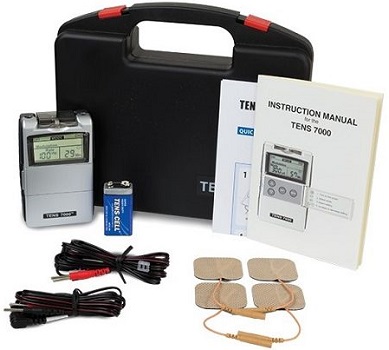
TENS 7000
Dual-channel unit with adjustable intensity, pulse width and pulse rate for users who want more control.
Rechargeable value
AUVON Dual Channel
A compact rechargeable option with independent channels and multiple preset modes.
Simple controls
OMRON PM500
A straightforward single-channel design with body-area modes and a 15-minute session limit.
Does a TENS unit help knee pain?
TENS can reduce pain during or shortly after stimulation for some people, but the size and reliability of the benefit vary. The best-studied knee condition is osteoarthritis. A 2026 systematic review and meta-analysis included 36 randomized trials with 2,518 participants and found a small but statistically significant reduction in pain overall, with larger effects when TENS was compared with placebo or minimal treatment.
What the evidence means in practice
The 2026 review is encouraging, but it does not settle the question. The authors reported variation in study methods and called for better sham-controlled trials. Earlier evidence has also been inconsistent. A Cochrane overview of chronic pain reviews concluded that the evidence was too low-certainty to confidently say TENS is effective for chronic pain in general.
Guidelines therefore remain cautious. NICE guideline NG226 says not to offer TENS for osteoarthritis because there is insufficient evidence of benefit. The American College of Rheumatology/Arthritis Foundation guideline strongly recommends against TENS for knee and hip osteoarthritis.
Bottom line: TENS is best viewed as an optional, non-drug comfort measure rather than a treatment that repairs cartilage, heals a ligament, reduces inflammation at its source or replaces exercise-based rehabilitation. If it clearly helps you and is safe for you, it may be reasonable to discuss its use with your clinician.
What is TENS, and how does it work?
Transcutaneous electrical nerve stimulation (TENS) uses adhesive electrodes on the skin to deliver a low-voltage electrical current. The sensation is usually described as tingling or pulsing. The exact pain-relief mechanism is not fully settled, but TENS is thought to alter pain-signal processing in the nervous system and may also influence the body’s own pain-modulating chemicals.
The NHS describes TENS as a treatment that can provide temporary pain relief and notes that it does not work for everyone. That distinction matters for knee pain: a TENS unit can change how pain feels while it is being used, but it cannot tell you why the knee hurts.
If your pain is new, unexplained or accompanied by swelling, locking, instability or loss of motion, identify the cause before relying on an electrical stimulation device. You may also want to compare other non-invasive supports in our knee brace guide or our overview of ice packs for knees, depending on the diagnosis and advice you receive.
How do you use a TENS unit for knee pain safely?
Use the exact device manual as your primary instruction source, and start with the lowest comfortable intensity. TENS should feel strong enough to notice but should not be painful. Do not copy another person’s frequency, pulse width or treatment time automatically; devices differ, and the best-studied settings are not standardized across all causes of knee pain.
- Know what you are treating. If the knee pain is unexplained, severe, associated with a recent injury, or accompanied by major swelling, warmth or fever, get medical advice before masking the symptom with TENS.
- Read the contraindications in your manual. Device-specific warnings can be more restrictive than general TENS advice.
- Prepare clean, dry, intact skin. Do not put electrodes over broken, infected, irritated or numb skin.
- Position the pads around the painful area. Keep the pads separated as directed by the manufacturer. If you are unsure about placement, ask a physiotherapist or other qualified professional to demonstrate it.
- Turn the intensity up gradually. Aim for a comfortable but clear tingling sensation. Stop if the stimulation is painful, causes dizziness or produces concerning symptoms.
- Use the device timer or labeled session limit. Some home units allow long adjustable sessions; others, such as the OMRON PM500, are designed around 15-minute treatment cycles.
- Check your skin after use. Mild temporary redness can occur under adhesive pads. Stop using the device and seek advice if irritation persists, blisters develop or your skin becomes painful.
Do not chase a stronger sensation. More intensity is not automatically more effective. TENS should remain comfortable, and it should never be used to push through an injury that needs rest, assessment or rehabilitation.
Where should TENS pads go for knee pain?
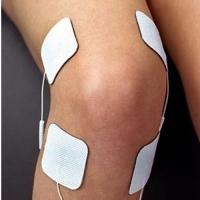
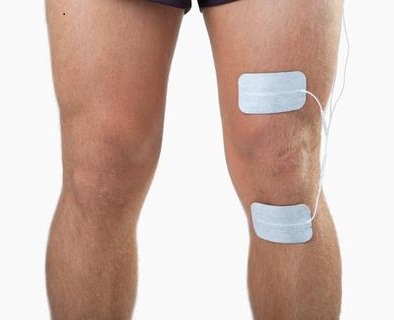
For many knee applications, pads are placed on intact skin around the painful region rather than directly over a prominent bony point. The exact arrangement depends on whether your unit uses two or four pads and where your symptoms are located. Follow the placement diagram for your specific device instead of treating a generic online image as a prescription.
A two-pad setup may place one electrode on each side of the painful region. A four-pad setup can surround a broader area. Keep electrodes the distance apart specified by the manufacturer. The TENS 7000 manual, for example, emphasizes that electrode placement is important and instructs users to keep electrodes separated rather than overlapping.
Placement safety matters more than a perfect pattern. The NHS advises against using TENS on irritated, broken, infected or numb skin; on the neck, mouth or eyes; or across the chest and back at the same time. Do not use TENS in the bath or shower, while sleeping, driving, or operating machinery.
Posterior knee pain, marked swelling or a new lump behind the knee deserves proper assessment rather than self-directed electrode placement. Pain behind the knee can have several causes, and TENS should not delay evaluation of a new or worsening problem.
What TENS settings should you use for knee pain?
There is no single evidence-based frequency, pulse width or intensity that is best for every painful knee. Research trials use different settings, and a 2026 dose-response review found that session duration appeared to influence pain outcomes more consistently than frequency or intensity. That does not mean every person should use a long session; the device’s labeled limits still come first.
For a home unit, the safest practical approach is to choose a TENS mode specified for pain, begin at a low intensity and increase only to a strong but comfortable tingling. If you have a TENS/EMS combination device, remember that EMS is intended to stimulate muscle contraction and is not the same therapy mode as conventional TENS.
Do not use a preset name as a diagnosis. A button labeled “arthritis,” “knee” or “joint” is a programming shortcut, not proof that the device is the right treatment for your condition.
Three home TENS units to compare in 2026
These are real home-use TENS devices with current U.S. listings located during this update. They are compared by controls, power source and pad setup—not by a claim that one device will treat the cause of knee pain. Prices and stock change, so use the Amazon links to confirm the exact model and current offer before ordering.
| Unit | Best for | Channels / pads | Power | Recent price band* |
|---|---|---|---|---|
| TENS 7000 | Fine manual control | 2 channels / up to 4 pads | 9V battery | About $35–$45 |
| AUVON Dual Channel | Rechargeable value | 2 independent channels / up to 4 pads | Rechargeable | About $25–$40 |
| OMRON PM500 | Simpler operation | 1 channel / 2 pads | 2 AAA batteries | About $45–$80 |
01 / FINE MANUAL CONTROL
TENS 7000 Digital TENS Unit
The TENS 7000 is the most adjustable option here for people who prefer traditional manual controls. Its two channels can run up to four electrodes, and the device allows changes to intensity, pulse width, pulse rate and therapy mode. That flexibility is useful if a clinician has shown you specific settings, but it also creates a steeper learning curve.
Key features
- Two independent stimulation channels
- Five therapy modes
- Adjustable pulse width and pulse rate
- Uses a replaceable 9V battery
Pros
- More control than a simple preset-only unit
- Can use two or four electrodes
- Long-established model with replacement pads and leads widely available
Cons
- Not rechargeable in this version
- Manual settings can be more complicated for first-time users
- Not a good fit if you want one-button simplicity
Best for: Someone who wants adjustable TENS parameters and is comfortable reading the manual or following clinician-provided settings. Not ideal for: users who want rechargeable power or very simple presets.
02 / RECHARGEABLE VALUE
AUVON Dual Channel TENS Unit
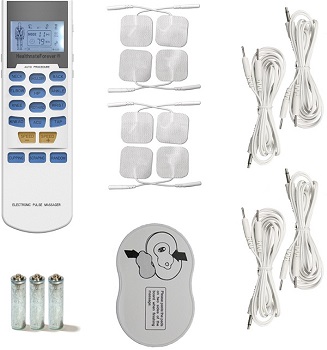
The AUVON Dual Channel TENS Unit is a practical rechargeable choice if you want independent control over two channels without manual pulse-width programming. The current 20-mode version includes both smaller and larger reusable electrodes, which can make it easier to adapt coverage to different body areas. Presets simplify setup, but the many modes can still feel busy.
Key features
- Two independently adjustable channels
- 20 preset modes
- 20 intensity levels
- Rechargeable battery and mixed pad sizes
Pros
- Rechargeable, so there is no disposable battery to replace regularly
- Independent channel settings
- Comes with more than one electrode size
Cons
- Many preset modes can be confusing at first
- Pad adhesion gradually declines with reuse
- The exact Amazon variant should be checked because AUVON sells several similar TENS models
Best for: Home users who want rechargeable power and independent channel control. Not ideal for: people who prefer a minimal interface with only a few choices.
03 / SIMPLE CONTROLS
OMRON Max Power Relief TENS Unit PM500
The OMRON PM500 is the simplest unit in this comparison: one channel, two pads, body-area presets and a 15-minute treatment cycle. It is less flexible than a dual-channel unit, but that can be an advantage for someone who wants to avoid managing four electrodes or programming pulse parameters. It runs on two AAA batteries rather than a rechargeable pack.
Key features
- Six body-area pain modes plus three massage-style modes
- 15 intensity levels
- Single channel with two reusable pads
- 15-minute maximum therapy duration per cycle
Pros
- Fewer controls to learn
- Compact and lightweight
- Manufacturer publishes clear specifications and instructions
Cons
- Only one channel and two pads
- Uses disposable AAA batteries
- Less control over technical stimulation parameters
Best for: Someone who prioritizes simple operation over maximum adjustability. Not ideal for: users who need four-pad coverage or independently controlled channels.
What should you look for in a TENS unit for knee pain?
Two channels if you want four-pad coverage
A dual-channel unit can control two electrode pairs, which is useful when you want to surround a larger painful area. A single-channel unit is simpler and may be enough if you only need two pads. More channels do not make a unit more therapeutic; they mainly change coverage and control.
Easy intensity adjustment
Choose controls you can adjust gradually without accidental jumps in intensity. Knobs are fast but can be sensitive. Digital buttons can be more precise but may require more menu navigation. If hand strength, vision or dexterity is limited, read the manual and inspect the control layout before buying.
Replacement-pad cost and availability
Electrode pads are consumables, so long-term ownership cost depends partly on replacement pads. Check the connector type and pad dimensions before ordering refills. A cheap device can become inconvenient if compatible electrodes are hard to find or if the adhesive wears out quickly.
Rechargeable versus replaceable batteries
Rechargeable units reduce battery purchases, while replaceable-battery units are easy to power immediately if you keep spares. Neither design is inherently better for pain relief. Choose based on how often you expect to use the device and whether you want to manage charging.
If electrical stimulation is not comfortable or helpful, other options may make more sense depending on the cause of your symptoms. Our knee cluster also covers knee massagers, braces for knee osteoarthritis and Leukotape for knee pain.
Who should not use a TENS unit?
TENS is not appropriate for everyone, and device manuals may contain additional restrictions. The NHS advises against TENS use for people with a pacemaker or epilepsy and during pregnancy unless a doctor or midwife says it is appropriate. If you have another implanted electronic device or a significant heart-rhythm condition, get device-specific medical advice before use.
Do not use TENS in these situations
- On broken, infected, irritated or numb skin
- On the neck, mouth or near the eyes
- Across the chest and back at the same time
- While sleeping
- In the bath or shower
- While driving, cycling in traffic, or operating tools or machinery
When should knee pain be checked instead of self-treated with TENS?
Get prompt medical advice when knee pain is severe, follows a significant injury, prevents weight-bearing, causes major swelling or comes with redness, heat or fever. TENS can change pain perception, so it should not be used to delay assessment of symptoms that could reflect a fracture, ligament injury, infection or another condition needing specific treatment.
Seek urgent assessment if
- You cannot move the knee or put weight on it.
- The knee is badly swollen, has changed shape or looks deformed.
- The knee locks, repeatedly gives way or you cannot fully bend or straighten it.
- You have fever or feel unwell with redness and heat around the knee.
- You have severe pain after an injury.
If your knee pain is persistent but not urgent, a clinician or physiotherapist can help identify whether the problem is more likely to respond to exercise, load management, medication, bracing, taping or another treatment. For broader background on electrical stimulation, see our general TENS unit guide.
Frequently asked questions
Can TENS make knee pain go away permanently?
No. TENS is intended for temporary symptom relief, not permanent correction of the cause of knee pain. If pain comes from osteoarthritis, a meniscus injury, tendinopathy, ligament damage or another condition, the underlying problem still needs an appropriate management plan. A useful TENS response does not confirm a diagnosis or mean rehabilitation is unnecessary.
Can I put TENS pads directly on my kneecap?
It is usually more practical to place electrodes on soft tissue around the painful region rather than directly over a prominent bony point, but exact placement depends on the device and your symptoms. Follow your manufacturer’s placement guide. If you are unsure, ask a physiotherapist to show you a safe arrangement for your knee.
How long should I use a TENS unit on my knee?
Use the treatment time allowed by your specific device and any instructions from your clinician. There is no universal session length for knee pain. Home units differ substantially—for example, the OMRON PM500 uses 15-minute cycles, while other devices allow longer timers. Stop earlier if the stimulation becomes uncomfortable or irritates your skin.
How strong should TENS feel?
TENS should create a definite but comfortable tingling or pulsing sensation. Start low and increase gradually. It should not burn, sting or feel painful. Conventional TENS also does not need to produce a strong muscle contraction. If the unit has a separate EMS mode, read the manual because that mode intentionally stimulates muscle differently.
Is TENS recommended for knee osteoarthritis?
The evidence is mixed. A 2026 meta-analysis found a small overall reduction in knee-osteoarthritis pain, but NICE advises not to offer TENS for osteoarthritis because evidence of benefit is insufficient, and the ACR/Arthritis Foundation guideline strongly recommends against it for knee and hip OA. Discuss it as an optional adjunct, not a core treatment.
Can I use TENS if I have a knee replacement?
Do not assume TENS is appropriate after knee replacement surgery without checking with your surgical or rehabilitation team. Timing, incision healing, altered sensation and implanted-device considerations can change what is safe. Never place electrodes over an unhealed incision, infected skin or an area with reduced sensation unless your healthcare team has specifically advised you.
Medical disclaimer: This article is for general information only and is not medical advice. Talk to a qualified healthcare professional about your specific symptoms, diagnosis and treatment options.