Weighted Blanket for Restless Legs: 5 Picks (2026)
2026 evidence-first guide · comfort, sleep & safety
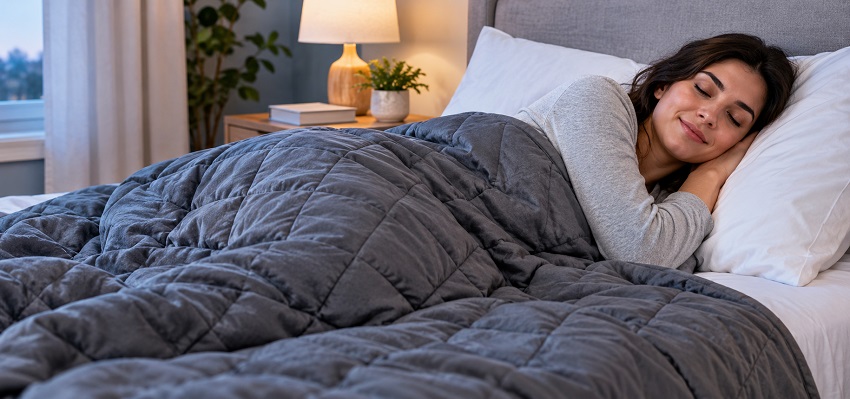
A weighted blanket for restless legs may feel calming or make sleep more comfortable for some adults, but it is not a proven treatment for restless legs syndrome (RLS). Direct RLS evidence is very limited, and weighted blankets are not among the treatments recommended in the 2025 American Academy of Sleep Medicine guideline. If you still want to try one as a comfort aid, choose a blanket you can move and remove easily, and do not let it delay assessment of persistent symptoms.
Quick picks
All-around shortlist
YnM 15 lb
A well-established glass-bead design with multiple size choices and a straightforward 48-by-72-inch option.
Beadless option
ZonLi Knitted
A chunky-knit, beadless 15-pound design for people who dislike the feel or shifting sound of glass-bead blankets.
Simple value pick
Weighted Idea 15 lb
A basic 48-by-72-inch glass-bead blanket with a broad current Amazon presence and no unnecessary extras.
How we chose these weighted blankets
This is a desk-research comparison, not a hands-on product test and not a claim that any blanket treats RLS. We checked current 2026 Amazon US listings and manufacturer information, then shortlisted adult blankets that differ in construction, dimensions, materials or care. We prioritized clear sizing, current product identifiers, washable or low-maintenance designs, and practical differences that matter at bedtime.
Do weighted blankets help restless legs syndrome?
Possibly for comfort, but not as an evidence-based RLS treatment. Weighted blankets may help some people feel calmer or sleep more comfortably, yet the research is mainly about insomnia, anxiety or other populations rather than restless legs syndrome itself. The 2025 American Academy of Sleep Medicine guideline for RLS does not list weighted blankets among its recommended treatments.
What the research actually shows
- A 2024 pilot randomized trial of 102 adults with insomnia found a larger improvement in self-reported sleep quality after one month with a weighted blanket than with a normal blanket. The trial was about insomnia, not RLS, and the authors called for larger studies.
- A separate 2024 polysomnography study in people with psychophysiological insomnia excluded patients with RLS. It reported some sleep improvements but also an increase in obstructive apnea-hypopnea index, which supports caution in people with sleep apnea.
- A 2023 report describing a weighted blanket for periodic limb movement disorder was a single-patient case report. That is too weak to establish effectiveness for RLS or PLMD.
Practical takeaway: If you already like the feeling of a heavier blanket, it may be reasonable to try one as a comfort aid. Judge it by comfort, heat, freedom of movement and sleep quality—not by claims that it “cures,” “stops” or medically treats RLS.
How can you tell if the problem is really RLS?
Restless legs syndrome is characterized by a strong urge to move the legs, usually with uncomfortable sensations. Symptoms typically begin or worsen during rest, improve temporarily with movement, and are worse in the evening or at night. RLS is different from ordinary muscle cramps, simple numbness, or merely tossing and turning in bed.
- Starts with rest: sitting or lying down brings on or worsens the sensations.
- Movement helps: walking, stretching or moving the legs gives temporary relief.
- Evening pattern: symptoms are usually stronger later in the day or at night.
- Other causes must be considered: cramps, neuropathy, medication effects and other conditions can mimic RLS.
Mayo Clinic notes that iron testing can be part of the evaluation because iron deficiency can cause or worsen RLS. Pregnancy, kidney disease and some medicines can also be associated with symptoms. See Mayo Clinic’s RLS diagnosis and treatment overview.
Five weighted blankets to consider in 2026
| Blanket | Why it stands out | Example variant | Before you buy |
|---|---|---|---|
| YnM 15 lb | Established glass-bead design | 15 lb · 48 × 72 in | Choose weight and size separately |
| ZonLi Knitted | Beadless chunky-knit construction | 15 lb · 60 × 80 in | Open knit feels different from quilted blankets |
| Weighted Idea | Simple quilted value option | 15 lb · 48 × 72 in | Check wash/care instructions for your variant |
| Quility | Cotton, glass-bead construction | 15 lb · 60 × 80 in | Large size spreads weight over more area |
| Mr. Sandman | Soft minky queen-size option | 15 lb · 60 × 80 in | Plush fabric may feel warmer |
Do not buy based on “RLS relief” marketing. None of these products has been shown in a high-quality trial to treat restless legs syndrome. The shortlist is about blanket construction and comfort only.
01 / ALL-AROUND SHORTLIST
YnM 15 lb Weighted Blanket
The YnM 15-pound blanket is a straightforward starting point if you want a traditional weighted blanket with glass beads. The current Amazon variant we verified is 48 by 72 inches, while YnM’s own range includes multiple dimensions and weights. That flexibility makes it easier to avoid buying a blanket simply because it matches your mattress size.
Key features
- Traditional quilted construction with glass beads
- Verified 15 lb, 48 × 72 in Amazon variant
- Manufacturer offers several weight and size choices
- Designed to cover the sleeper rather than drape like a normal comforter
Pros
- Many size and weight combinations
- Small-pouch glass-bead style is familiar and widely available
Cons
- Glass-bead blankets can feel dense and warmer than a light duvet
- The right weight is a personal comfort and safety choice, not an RLS treatment dose
Best for: Adults who want a conventional weighted blanket with several size and weight choices.
Not for: Anyone who finds bead-filled blankets noisy, too warm or difficult to move under.
02 / BEADLESS OPTION
ZonLi Knitted Weighted Blanket 15 lb
This ZonLi model uses a chunky knitted structure rather than internal glass beads. The verified Amazon variant is 15 pounds and 60 by 80 inches. A beadless blanket can appeal to people who dislike the granular feel or potential shifting of bead-filled designs, although the open-knit feel is very different from a traditional comforter.
Key features
- Beadless knitted construction
- Verified 15 lb, 60 × 80 in Amazon variant
- Open weave allows more airflow than many layered bead blankets
- Weight is created by the knitted material itself
Pros
- No glass beads to shift within sewn pockets
- Open-knit design may suit people who sleep warm
Cons
- Chunky texture is not as smooth as a quilted blanket
- A 60-by-80-inch blanket spreads 15 pounds over more area than a smaller 48-by-72-inch model
Best for: Adults who want weighted pressure without glass-bead fill.
Not for: People who prefer a smooth, close-fitting quilted blanket.
03 / SIMPLE VALUE OPTION
Weighted Idea 15 lb Weighted Blanket
The current Weighted Idea listing we verified is a 15-pound, 48-by-72-inch blanket with glass beads and a microfiber outer fabric. It is a basic, compact option that concentrates its total weight over a smaller area than a 60-by-80-inch queen-size blanket of the same weight.
Key features
- 15 lb total weight
- 48 × 72 in dimensions
- Microfiber construction with glass beads
- Quilted all-season style
Pros
- Compact adult size
- Straightforward construction without a bulky attached cover
Cons
- Microfiber may feel warmer than an open-knit design
- Smaller footprint may not suit sleepers who want broad bed coverage
Best for: Adults who want a simple, smaller-footprint 15-pound blanket.
Not for: Hot sleepers who strongly prefer natural fibers or open-knit airflow.
04 / COTTON QUEEN-SIZE OPTION
Quility 15 lb Weighted Blanket
The Quility listing we verified pairs a 15-pound fill with 60-by-80-inch dimensions and a cotton outer fabric around glass-bead weighting. It is worth comparing if you prefer a larger queen-size footprint, but remember that the same 15 pounds spread across a larger surface can feel less concentrated than on a smaller blanket.
Key features
- 15 lb total weight
- 60 × 80 in queen-size footprint
- Cotton outer fabric
- Glass-bead weighted construction
Pros
- Larger footprint than many 48-by-72-inch models
- Cotton outer fabric may appeal to people avoiding plush microfiber
Cons
- Large blankets are heavier and more awkward to wash or move
- Less concentrated pressure than a smaller blanket of equal total weight
Best for: Adults who want a broader 60-by-80-inch weighted blanket with a cotton surface.
Not for: Anyone who wants the easiest possible blanket to lift, carry or launder.
05 / SOFT MINKY OPTION
Mr. Sandman 15 lb Weighted Blanket
This 15-pound, 60-by-80-inch Mr. Sandman listing uses a soft minky-style outer fabric with glass beads. The plush surface may feel cozy if you tend to be cold at night, but it can also retain more warmth than a cotton or open-knit blanket.
Key features
- 15 lb total weight
- 60 × 80 in dimensions
- Soft minky-style outer fabric
- Glass-bead fill
Pros
- Soft surface for people who like plush bedding
- Queen-size footprint
Cons
- Plush fabric can feel hot to warm sleepers
- Large weighted blankets can be cumbersome to handle
Best for: Adults who prefer a soft, warmer-feeling weighted blanket.
Not for: Hot sleepers or anyone who dislikes plush synthetic fabric.
How should you choose a weighted blanket if you have restless legs?
Choose for comfort and safe movement, not for a supposed RLS “dose.” Manufacturers often suggest a blanket around 6% to 10% of body weight, but there is no clinical rule showing that exactly 10% is ideal for restless legs syndrome. A blanket should feel secure without making it hard to turn, breathe normally or remove it on your own.
1. Start lighter if you are unsure
A lighter blanket is easier to reposition and remove. If you have never used a weighted blanket, do not assume heavier means more therapeutic. The goal is comfort, not maximum pressure.
2. Compare blanket size as well as pounds
Fifteen pounds spread across 60 by 80 inches will feel different from 15 pounds across 48 by 72 inches. Weighted blankets are usually intended to cover the sleeper, not hang far over the sides of the bed.
3. Think about temperature
RLS often becomes noticeable in bed, so a blanket that makes you uncomfortably hot can be counterproductive. Cotton, cooling fabrics and open-knit designs may suit hot sleepers better than plush minky or heavily layered constructions. If warmth helps your legs, you may also prefer a lighter regular blanket plus a separate heat source rather than extra weight. See our electric foot warmer for bed guide and foot warmers guide for other comfort options.
4. Check care instructions before buying
A 15- or 20-pound blanket can exceed the practical load for some household washing machines. Check whether the exact blanket is machine washable, spot-clean only, or designed for use with a removable duvet cover.
5. Make sure movement is still easy
Because the defining feature of RLS is an urge to move that improves with movement, a blanket that makes leg movement frustrating may simply be the wrong product for you. You should be able to change position and push the blanket away without help.
A blanket should never be used to restrain the legs. If the pressure makes your urge to move worse, causes panic, numbness, pain or breathing discomfort, stop using it.
What helps restless legs syndrome more than a blanket?
RLS care starts with the cause and symptom pattern. Current guidance emphasizes checking iron status, reviewing medicines and other aggravating factors, and using evidence-based treatment when symptoms are frequent or disruptive. A weighted blanket can sit alongside a bedtime routine, but it should not replace this evaluation.
Check iron with a healthcare professional
The AASM guideline places strong emphasis on iron evaluation in people with RLS, and Mayo Clinic notes that blood tests—especially iron testing—can help look for causes and guide treatment. Do not start high-dose iron just because your legs are restless; iron treatment should be based on appropriate testing and clinical guidance.
Review medicines and substances
Some antidepressants, antipsychotic medicines, anti-nausea medicines, and cold or allergy medicines can worsen RLS in some people. Caffeine, alcohol and nicotine may also aggravate symptoms. Do not stop a prescription medicine on your own—ask the prescriber whether an alternative or timing change makes sense.
Use movement, massage, heat or cold for short-term comfort
Walking, stretching, baths, massage and warm or cool packs may provide temporary relief. If massage feels good, our leg massager guide covers devices for comfort; it should not be treated as a substitute for RLS evaluation.
Medication can be appropriate for persistent RLS
The 2025 AASM guideline strongly recommends gabapentin enacarbil, gabapentin and pregabalin for adults with RLS, along with IV ferric carboxymaltose for people with appropriate iron status. Dopamine medicines that were once commonly used have moved down in the guideline because long-term use can cause augmentation, meaning symptoms may begin earlier, become more severe or spread.
If you are exploring other bedtime products, remember that compression socks for sleeping are not a standard RLS treatment either. Choose products for a clearly defined need, not because they are marketed as a cure-all for nighttime leg discomfort.
Who should be cautious with a weighted blanket?
A weighted blanket is not suitable for everyone. Adults with breathing or mobility problems should discuss it with a healthcare professional before sleeping under one, and the blanket should never be so heavy that the user cannot remove it independently.
Important safety points
- Sleep apnea or breathing problems: discuss weighted blanket use with a clinician first. A 2024 sleep study found an increase in obstructive apnea-hypopnea index while participants used weighted blankets.
- Limited mobility or weakness: do not use a blanket you cannot push off and remove independently.
- Claustrophobia or panic: stop if the pressure feels trapping rather than calming.
- Infants: never use weighted blankets, weighted swaddles or weighted sleep products. The American Academy of Pediatrics advises against weighted objects on or near a sleeping infant.
- Children: do not reuse adult rules or old “10% plus a pound” formulas automatically. Get individualized pediatric guidance and make sure the child can remove the blanket independently.
When should you see a healthcare professional?
Talk with a healthcare professional if the urge to move your legs repeatedly interferes with falling asleep, wakes you at night, causes daytime sleepiness, or is getting more frequent. Evaluation is especially useful if symptoms began during pregnancy, you may have iron deficiency or kidney disease, or a medicine change seemed to trigger the problem.
Do not self-diagnose every nighttime leg problem as RLS. New weakness, persistent numbness, significant swelling, severe pain or other unusual symptoms deserve medical assessment because they can point to a different condition.
Frequently asked questions
Can a weighted blanket stop restless legs at night?
No high-quality evidence shows that a weighted blanket stops or treats RLS. Some people may find the pressure comforting, and studies in insomnia suggest weighted blankets can improve subjective sleep quality for some users. However, the 2025 AASM RLS guideline focuses on iron evaluation and established therapies rather than weighted blankets.
What weight blanket is best for restless legs?
There is no medically proven blanket weight for RLS. Manufacturers commonly suggest roughly 6% to 10% of body weight, but that is a product-sizing convention, not an RLS treatment dose. Start with comfort and safety: you should be able to turn, move your legs and remove the blanket easily.
Can a weighted blanket make restless legs worse?
It can if you dislike pressure, get too warm or feel restricted when you need to move. Because movement temporarily relieves RLS symptoms, a blanket that makes changing position harder may be frustrating. If symptoms feel worse under the blanket, stop using it rather than increasing the weight.
Are weighted blankets safe with sleep apnea?
Ask your sleep clinician before using one. A 2024 polysomnography study of weighted blankets in insomnia found an increase in obstructive apnea-hypopnea index, and people with RLS were excluded from that study. This does not prove every weighted blanket worsens apnea, but it is a reasonable safety reason to get individualized advice.
Should I take iron for restless legs?
Only after appropriate testing and clinical guidance. Iron deficiency can cause or worsen RLS, and current AASM guidance places substantial emphasis on iron evaluation. But iron is not harmless in unlimited amounts, so do not start high-dose supplements solely because you have nighttime leg symptoms.
Can children use weighted blankets for restless legs?
Infants should never use weighted sleep products. For older children, do not rely on adult weight formulas or assume a weighted blanket treats RLS. A pediatric clinician can help confirm whether the symptoms are actually RLS and whether any weighted product is appropriate and safe for the child.
This article is for general information only and is not medical advice. Talk to a qualified healthcare professional about your symptoms, diagnosis and treatment options.