Best Shoes for Heel Pain: 7 Top Picks for Men and Women (2026)
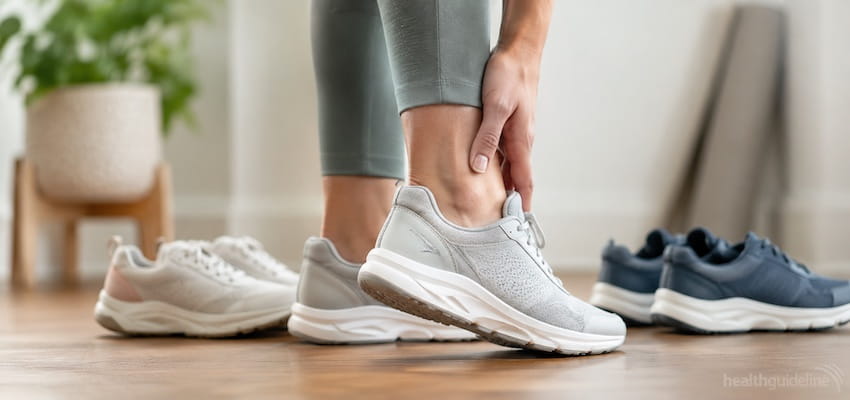
The HOKA Bondi 9 is the best all-round shoe for most people with heel pain — the most cushioning in HOKA’s line plus a stable heel that softens those first painful morning steps.
Best all-round
HOKA Bondi 9
Best budget
Skechers Arch Fit
Best for recovery
OOFOS OOriginal
Best for wide feet / all-day standing
Orthofeet
Heel pain — most often plantar fasciitis — can make the first steps out of bed genuinely miserable and turn a long day on your feet into a grind. The right footwear won’t cure it on its own, but supportive, well-cushioned shoes take load off the plantar fascia and can noticeably calm symptoms. Below are the best shoes for heel pain in 2026 for both men and women, chosen for the features that actually matter for a sore heel — a firm heel counter, real arch support and shock absorption — and grouped by how you’ll use them, from all-day standing to post-workout recovery.
JUMP TO A SECTION
How we chose
We synthesized 2025–2026 podiatrist buying guides and reputable shoe-testing roundups, then prioritized the features clinicians consistently recommend for heel pain and plantar fasciitis: a firm heel counter, contoured arch support, cushioning that absorbs impact at heel strike, an appropriate heel-to-toe drop, a removable insole so a custom orthotic can be added, and availability in multiple widths. Every shoe below is a real product currently sold on Amazon at the time of writing. Because prices and stock change constantly, we list approximate price bands rather than fixed numbers — always check the current price on the live listing.
Best shoes for heel pain at a glance
| Shoe | Best for | Standout feature | Approx. price | Widths |
|---|---|---|---|---|
| HOKA Bondi 9 | Best overall / max cushion | Tall soft midsole + stable heel frame | ~$170 | Regular, wide, X-wide |
| Brooks Adrenaline GTS 25 | Overpronation / stability | GuideRails motion support | ~$140 | Narrow–X-wide |
| ASICS Gel-Nimbus 28 | Plush neutral daily wear | PureGEL heel + FF Blast+ foam | ~$160 | Regular, wide |
| New Balance Fresh Foam X 1080v14 | Cushioned all-rounder / orthotics | Soft Fresh Foam X, orthotic-friendly | ~$165 | Narrow–X-wide |
| Orthofeet (Coral / Innovator) | All-day standing & wide feet | Orthotic insole + deep heel cup + rocker sole | ~$120–150 | Wide & X-wide |
| Skechers Arch Fit | Best budget | Podiatrist-designed removable arch insole | ~$70–100 | Regular, wide |
| OOFOS OOriginal / OOahh | Recovery after activity | OOfoam impact absorption, APMA Seal | ~$60–70 | Whole sizes |
01 / BEST OVERALL
HOKA Bondi 9
The Bondi 9 is HOKA’s most-cushioned everyday shoe, pairing a tall, soft supercritical-EVA midsole with a rockered sole and a firmer rear “Active Foot Frame” that steadies each landing. That mix absorbs impact at heel strike and eases first-step morning pain, which is why it repeatedly tops podiatrist and tester lists for heel pain.
Key features:
- Maximum EVA cushioning with a 5 mm heel-to-toe drop
- Active Foot Frame (raised rear sidewalls) for a stable feel despite the tall stack
- Early-stage MetaRocker geometry for a smooth heel-to-toe roll
- Breathable mesh upper; removable insole (orthotic-friendly); wide and extra-wide options
Pros
- Exceptional shock absorption
- stable for a max-cushion shoe
- the v9 update removed the older arch “poke,” so it now suits flat and wide feet
- durable outsole.
Cons
- The tall stack feels “high” to some
- the ride is firm and supportive rather than bouncy
- premium price.
Best for: Walkers and runners who want the most cushioning underfoot, morning heel pain, and long hours on hard floors. Who it’s not for: Fans of a low, connected, minimalist feel, or anyone wanting a lightweight racer.
02 / BEST FOR OVERPRONATION AND STABILITY
Brooks Adrenaline GTS 25
If your heel pain comes with feet that roll inward, the Adrenaline GTS is the classic pick. Its GuideRails hold excess motion in check without an aggressive medial post, while DNA LOFT cushioning and a structured heel counter support the plantar fascia and calm strain through each stride.
Key features:
- GuideRails holistic support that engages only when your stride needs it
- DNA LOFT v3 midsole cushioning with a firm, supportive heel counter
- Roughly 12 mm drop; engineered mesh upper
- One of the widest fit ranges here — narrow through extra-wide
Pros
- Excellent stability and arch support for overpronators
- secure heel hold
- broad width range
- consistently durable and a long-standing podiatrist favorite.
Cons
- Heavier than neutral shoes
- not as plush as a max-cushion trainer
- the guidance can feel unnecessary for neutral feet.
Best for: Overpronators and flat feet with heel pain who want structure. Who it’s not for: Neutral or high-arched feet who prefer a soft, unstructured ride.
03 / BEST PLUSH NEUTRAL DAILY TRAINER
ASICS Gel-Nimbus 28
The Gel-Nimbus is a neutral, max-cushion trainer built to soak up impact over long days and miles. FF Blast+ foam and a PureGEL heel insert soften heel strike, and a broad, stable platform keeps the ride controlled — a strong match for neutral feet with heel pain who want plushness without motion control.
Key features:
- FF Blast+ ECO foam midsole with a PureGEL heel unit for soft landings
- Broad, stable base; comfortable engineered-knit upper
- Roughly 8 mm drop; removable sockliner; wide options
Pros
- Soft, protective cushioning
- roomy, comfortable fit
- stable for its stack height
- good durability.
Cons
- Firmer and less “energetic” than the price might suggest
- on the heavier side
- neutral only, with no built-in stability.
Best for: Neutral feet wanting plush daily cushioning for walking and running. Who it’s not for: Overpronators needing stability, or anyone after a snappy, lively feel.
04 / BEST CUSHIONED ALL-ROUNDER
New Balance Fresh Foam X 1080v14
The 1080 is a soft, do-everything cushioned shoe that walks and runs equally well and readily accepts a custom orthotic once the sockliner comes out. Its Fresh Foam X midsole cushions the heel without feeling unstable, making it a versatile pick when heel pain shows up across daily activity rather than just workouts.
Key features:
- Soft Fresh Foam X midsole; roughly 6 mm drop
- Deep, comfortable fit with a removable insole for orthotics
- Knit upper; available in multiple widths
Pros
- Plush yet stable
- genuinely versatile for walking and running
- orthotic-friendly
- wide range of widths
- easy step-in comfort.
Cons
- The soft foam can feel less responsive at speed
- premium price
- year-to-year updates shift slightly firmer or softer, so preferences vary.
Best for: People who want one cushioned shoe for everything and may add orthotic insoles. Who it’s not for: Those wanting firm motion control or a racing feel.
05 / BEST FOR ALL-DAY STANDING AND WIDE FEET
Orthofeet orthopedic sneakers (Coral / Innovator)
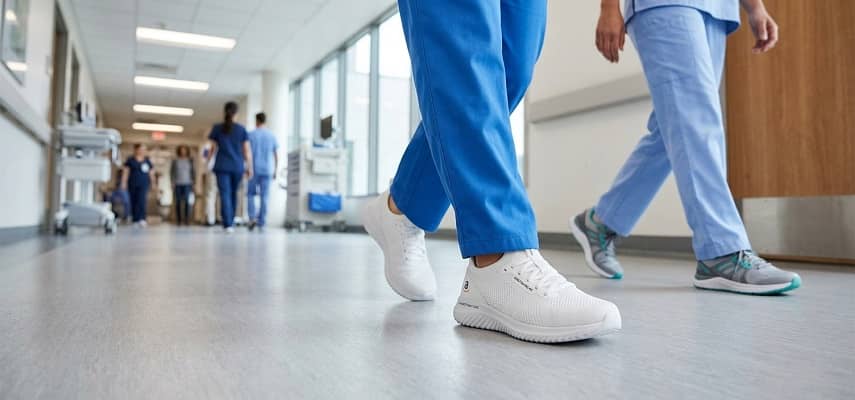
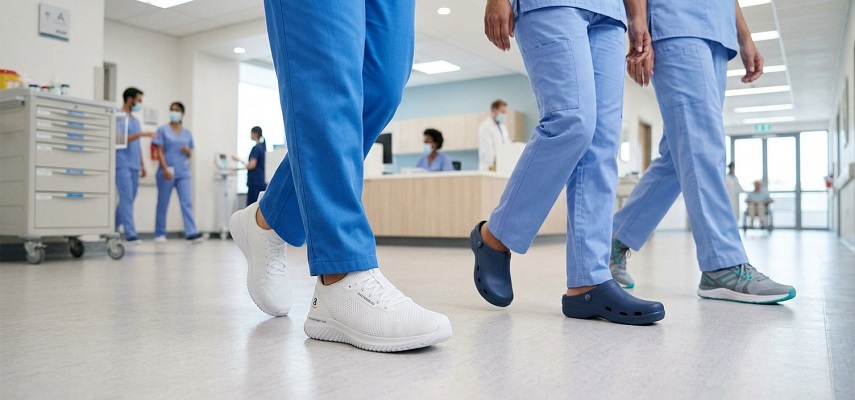
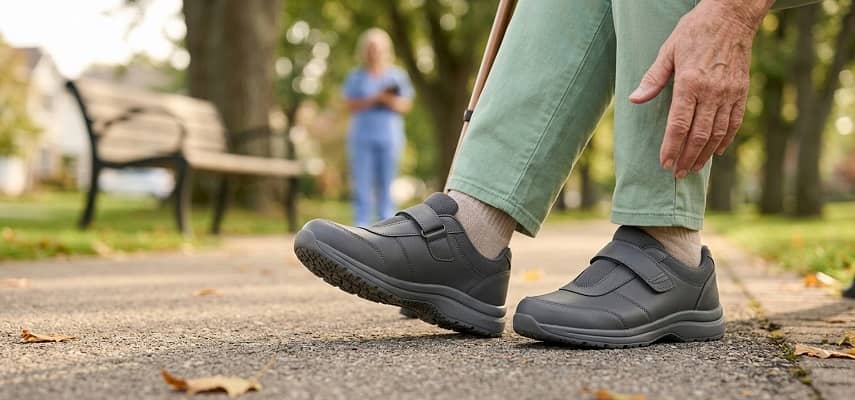
When a running shoe isn’t the dress code, Orthofeet’s orthopedic sneakers target heel pain directly: a contoured orthotic insole with a deep heel cup, an ergonomic rocker sole, extra-depth construction, and true wide and extra-wide widths. Nurses, teachers and hospitality staff lean on them for long shifts on hard floors.
Key features:
- Anatomical orthotic insole and arch support with a deep, cushioned heel cup
- Ergonomic rocker sole for a smooth, low-effort stride
- Extra depth and a seam-free interior; removable insole for custom orthotics
- Wide and extra-wide widths; frequently HSA/FSA-eligible; 60-day wear trial
Pros
- Built specifically for heel pain and problem feet
- outstanding width and depth options
- orthotic-friendly
- comfortable for all-day standing
- generous return window.
Cons
- Styling is comfort/orthopedic rather than athletic or fashion-forward
- not a performance running shoe
- confirm sizing during the wear trial.
Best for: All-day standing and work, wide or swollen feet, and anyone wanting built-in orthotic support with easy on/off. Who it’s not for: Runners, or shoppers who prioritize a sleek athletic look.
06 / BEST BUDGET
Skechers Arch Fit
Skechers Arch Fit delivers genuine, podiatrist-designed arch support and a cushioned, removable footbed at roughly half the price of premium trainers. It won’t match a HOKA’s stack height, but for shoppers who want everyday heel-pain relief on a budget, it’s the most credible value pick available.
Key features:
- Removable Arch Fit insole with a contoured, podiatrist-developed arch shape
- Lightweight cushioned midsole; breathable knit upper
- Huge range of sizes, widths and slip-on or lace-up styles; easy to clean
Pros
- Affordable
- real arch support at the price
- lightweight and comfortable
- enormous style and width selection.
Cons
- Less heel cushioning and stability than premium shoes
- the footbed can pack out sooner
- not built for high-mileage running.
Best for: Budget shoppers, casual walking and standing, and anyone testing whether arch support helps before spending more. Who it’s not for: Serious runners or severe overpronation that needs structured stability.
07 / BEST FOR RECOVERY
OOFOS OOriginal / OOahh
OOFOS recovery sandals aren’t your main support shoe — they’re what you slip into after a shift or workout, and keep beside the bed for those first painful morning steps. OOfoam absorbs more impact than standard EVA and the contoured footbed takes tension off the plantar fascia. They carry the APMA Seal of Acceptance.
Key features:
- Patented OOfoam for high impact absorption; contoured arch and deep heel cradle
- APMA Seal of Acceptance; machine-washable
- Styles include OOriginal (thong), OOahh (slide), OOcloog (clog) and the closed-toe OOmg Low
Pros
- Outstanding post-activity relief
- supports the arch and heel
- ideal around the house and after work on hard floors
- easy to clean
- widely recommended by podiatrists for recovery.
Cons
- Recovery footwear, not all-day athletic support
- open styles offer little lateral support
- sizing runs large (most people size down)
- not for running.
Best for: Recovery after standing or exercise, and first-step morning relief. Who it’s not for: Primary daily-support or athletic use — for a closed, structured option consider the OOmg Low, or the Vionic Tide II sandal (orthotic footbed, deeper heel cup, APMA-accepted; ~$100–130) for structured all-day sandal wear.
What to look for in shoes for heel pain
Whatever the brand, podiatrists tend to point to the same handful of features. Use these to judge any shoe, not just the ones above.
A firm heel counter
The heel counter is the stiff cup at the back of the shoe. A firm one cradles and stabilizes the heel, controls side-to-side motion and stops your foot sliding around inside. Squeeze the back of the shoe: if it collapses easily, it won’t do much for a sore heel.
Arch support
Support under the arch helps stop the plantar fascia from over-stretching and spreads load more evenly across the foot. If you already use custom orthotics, choose a shoe with a removable insole so your device fits properly — the New Balance 1080, Orthofeet and Skechers Arch Fit all allow this.
Cushioning and shock absorption
Extra foam or gel in the midsole softens the impact that lands on your heel with every step, which matters most on concrete and other hard surfaces. Max-cushion shoes like the Bondi 9 and Gel-Nimbus are built around exactly this.
Heel-to-toe drop
Drop is the height difference between heel and forefoot. Opinions differ: some podiatrists prefer a moderate 8–10 mm drop to ease first-step strain on the fascia, while others favor a cushioned, neutral shoe with a lower drop and a wider toe box. Both camps agree the shoe should be cushioned and shouldn’t force your foot into an unnatural position — so try a couple and let comfort decide.
The right fit
Measure both feet (they’re often slightly different) and shop later in the day when feet are largest. There should be roughly a thumb’s width at the toe, a secure heel with no slipping, and enough room across the forefoot. Wide and extra-wide options exist across most of the picks above.
About heel pain: causes and simple relief
According to the Cleveland Clinic, plantar fasciitis is the most common cause of heel pain, followed by Achilles tendinitis. Plantar fasciitis happens when the band of connective tissue running along the sole of your foot becomes irritated and inflamed, and it’s especially common in people who run or jump a lot or who spend long hours on hard surfaces. It’s also very common overall: the Cleveland Clinic notes that more than two million Americans are treated for it each year, and around one in ten people will develop it at some point in life.
A few points worth clearing up. Heel spurs — small bony growths that can form with long-standing plantar fasciitis — are usually not the source of the pain and often cause no symptoms at all. And while chronic heel pain can be frustrating, it rarely requires surgery; most cases settle with conservative, at-home care over time.
Alongside supportive footwear, commonly recommended self-care includes resting and easing off aggravating activity during a flare, gentle calf and plantar-fascia stretching, rolling the arch over a chilled bottle for short periods, and adding supportive insoles or orthotics. If your pain also shows up higher in the arch, our guide to arch pain on the foot covers related steps. These general measures aren’t a substitute for a proper diagnosis — see the next section.
When to see a professional
Shoes and self-care help many people, but heel pain has several possible causes, and getting the diagnosis right matters. Consider seeing a doctor or podiatrist if:
- Your heel pain hasn’t improved after a week or two of supportive shoes and gentle self-care, or it’s getting worse.
- The pain is severe, or you can’t put weight on the foot — especially after a specific injury (which can signal a fracture).
- You notice numbness, tingling, significant swelling, or redness and warmth (possible signs of nerve involvement or infection).
- You have diabetes, neuropathy or another condition affecting circulation or foot sensation.
A clinician can confirm whether it’s plantar fasciitis, Achilles tendinitis, a heel-pad or nerve issue, or something else, and tailor treatment — including whether a custom orthotic would help. This article is for general information only and is not medical advice.
Frequently asked questions
What are the best shoes for heel pain?
For most people the HOKA Bondi 9 is the best all-round choice, thanks to deep cushioning and a stable heel that softens morning heel pain. Beyond that, match the shoe to your need: Brooks Adrenaline GTS for overpronation, Skechers Arch Fit on a budget, Orthofeet for wide feet or all-day standing, and OOFOS for recovery.
What features should shoes for heel pain have?
Look for a firm heel counter that cradles and stabilizes the heel, contoured arch support to limit strain on the plantar fascia, and cushioning that absorbs impact at heel strike. A removable insole lets you fit custom orthotics, and the shoe should fit securely with a roomy toe box. These features matter more than any single brand name.
Are HOKA or Brooks better for heel pain?
It depends on your feet. HOKA (like the Bondi 9) leads on plush, maximum cushioning and suits neutral feet wanting shock absorption. Brooks (like the Adrenaline GTS) is the better pick if you overpronate, because its GuideRails add stability and arch support. Neutral feet often prefer HOKA; feet that roll inward often do better in Brooks.
Can the right shoes cure heel pain or plantar fasciitis?
No — shoes don’t cure heel pain, but they help manage it. Supportive, cushioned footwear reduces strain on the plantar fascia and can ease symptoms noticeably, especially alongside stretching, rest during flares and, where needed, orthotics. Plantar fasciitis usually improves with conservative care over time; persistent pain deserves a professional diagnosis.
Should I wear supportive shoes at home for heel pain?
Yes. Walking barefoot on hard floors gives the heel no cushioning or arch support and often aggravates symptoms — many people feel it most in the first steps of the morning. Slipping into supportive shoes or recovery footwear such as OOFOS around the house, and keeping a pair by the bed, can make those first steps much easier.
How long until new shoes help my heel pain?
Many people notice a difference within one to two weeks of switching to properly supportive, cushioned shoes and pairing them with gentle stretching. If there’s no improvement after a couple of weeks, or the pain worsens, that’s a sign to stop guessing and see a podiatrist for a tailored plan.
Medical disclaimer: This article is for general information only and is not medical advice. Talk to a qualified healthcare professional about your specific situation.