Best Quadriceps Tendinitis Brace: 7 Top Picks (2026)
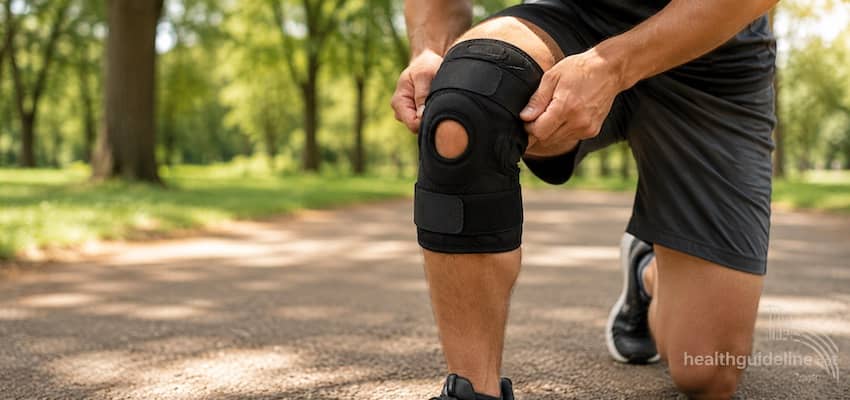
Quadriceps tendinitis causes pain above the kneecap — which matters, because most “patellar straps” sit below the kneecap and target a different tendon.
Best overall
An adjustable open-patella wrap like the Mueller Neoprene Open Patella Knee Brace — comfortable, affordable, easy to fine-tune.
Most targeted for the quad tendon
The Pro-Tec X-Trac Knee Support, which compresses both above and below the kneecap.
A brace is a supportive aid, not a cure. The tendon heals through load management and progressive strengthening (usually guided by a physical therapist), not from a brace alone.
Get sudden, severe pain or can’t straighten your knee? Stop and see a clinician — that can signal a tendon tear.
What is the best brace for quadriceps tendinitis?
For most people, the best brace for quadriceps tendinitis is an adjustable open-patella compression wrap, such as the Mueller Neoprene Open Patella Knee Brace, which supports the tendon above the kneecap while allowing movement. If you want pressure aimed directly at the quadriceps tendon, a dual-compression wrap like the Pro-Tec X-Trac works well. A brace eases symptoms but does not replace rest and rehabilitation.
How we chose
This guide is based on hands-on research rather than lab testing: we reviewed how each product is designed, matched each one to where quadriceps tendinitis actually hurts (above the kneecap), and cross-checked manufacturer specifications against independent review coverage and current availability on Amazon (US). We prioritized honest fit, comfort, adjustability, sizing range, and value, and we flag who each product is not right for. We don’t earn a commission on the links below.
Quick comparison
| Product | Best for | Type | Support | Approx. price* |
|---|---|---|---|---|
| Mueller Neoprene Open Patella Knee Brace | Best overall / everyday | Adjustable wrap | Moderate | ~$15–25 |
| Pro-Tec X-Trac Knee Support | Targeting the quad tendon | Dual-compression wrap | Light–moderate | ~$25–35 |
| Bauerfeind GenuTrain Knee Support | Premium / active use | Knit sleeve + patella pad | Moderate | ~$100–150 |
| POWERLIX Knee Compression Sleeve | Budget / mild symptoms | Compression sleeve | Light | ~$15–20 |
| McDavid Knee Strap | Mild pain during activity | Tendon strap | Targeted/light | ~$12–20 |
| Shock Doctor 875 Knee Brace | Max support (if unstable too) | Hinged brace | Maximum | ~$40–60 |
| NEENCA Professional Knee Brace | Wide size range / larger legs | Sleeve + stabilizers | Moderate | ~$25–40 |
Understanding quadriceps tendinitis (and why brace placement matters)
The quadriceps tendon connects your quadriceps muscles — the large group at the front of your thigh — to the top of your kneecap (patella). Quadriceps tendinitis is an overuse irritation of that tendon, and its hallmark is pain just above the kneecap that worsens with activities like squatting, climbing stairs, jumping, or standing up from a chair. It’s common in sports with a lot of jumping and stop-start movement, such as basketball and volleyball, but it also affects non-athletes.
This “above the kneecap” detail is the single most useful thing to understand when shopping. A classic patellar strap sits below the kneecap and presses on the patellar tendon — that’s the setup for jumper’s knee, a related but different problem. For the quadriceps tendon, the more relevant options are an open-patella compression wrap or sleeve, or a strap/wrap that applies pressure above the kneecap. Several products below do exactly that; we say which ones.
One honest caveat before the picks: bracing is a supportive adjunct. Compression can reduce swelling, add a sense of stability, and make movement more comfortable, but the evidence for braces treating the underlying tendon problem is limited. Clinicians consistently point to relative rest, gradual return to activity, and progressive (often eccentric) strengthening — usually guided by a physical therapist — as the treatments that actually rebuild tendon capacity. Think of a brace as something that helps you stay comfortable while you do the real rehab work.
The best quadriceps tendinitis braces
01 / BEST OVERALL
Mueller Neoprene Open Patella Knee Brace
A well-rounded, affordable, and widely available pick. The wraparound design opens flat and fastens around the knee, so it’s easy to put on and take off and easy to adjust — useful when swelling changes through the day. The open-patella window relieves pressure over the kneecap while the adjustable strap lets you dial in compression over the tendon above it. For everyday wear and mild-to-moderate symptoms, it’s hard to beat for the money.
Who it’s best for: most people wanting simple, adjustable, all-day support without spending much.
Who it isn’t for: anyone who runs hot or plans intense workouts — neoprene traps heat and can get sweaty. It also contains natural rubber latex, so skip it if you have a latex allergy.
Pros
- inexpensive
- easy on/off
- adjustable compression
- open-patella comfort.
Cons
- warm/sweaty in heat
- contains latex
- moderate (not maximum) support.
02 / BEST FOR TARGETING THE QUADRICEPS TENDON
Pro-Tec X-Trac Knee Support
Most straps only address the patellar tendon below the kneecap. The X-Trac is different: its X-shaped wrap applies adjustable compression both above and below the patella, so it actually reaches the quadriceps tendon — the exact spot that hurts in quad tendinitis — while also helping patellar tracking. The velcro adjustment lets you tune the pressure, and it’s designed to be worn during walking or running. If your main goal is targeted pressure on the quad tendon during activity, this is the standout.
Who it’s best for: active people who want focused, adjustable compression right over the quadriceps (and patellar) tendon during exercise.
Who it isn’t for: anyone needing full joint stabilization for ligament instability — this is a targeted support, not a rigid brace.
Pros
- compresses above and below the kneecap
- adjustable
- good for movement
- supports patellar tracking.
Cons
- open design offers less all-over warmth/coverage
- not for major instability.
03 / BEST PREMIUM OPTION
Bauerfeind GenuTrain Knee Support
A step up in quality and price. The GenuTrain is a medical-grade anatomically knit sleeve with a silicone ring (Bauerfeind calls it an Omega pad) that surrounds the kneecap to redistribute pressure and gently massage the surrounding tissue as you move. The knit is breathable and holds its shape well, so it stays comfortable during longer or more active wear than a basic neoprene sleeve. It’s a genuine investment, but people who wear a support daily or for sport often find the comfort and durability worth it.
Who it’s best for: daily or athletic users who want top-tier comfort, breathability, and build quality and don’t mind paying for it.
Who it isn’t for: budget shoppers, or anyone who only needs occasional light support — it’s more brace than the situation calls for.
Pros
- breathable knit
- targeted patella pad
- excellent build quality
- holds shape.
Cons
- expensive
- sizing must be measured precisely or the fit suffers.
04 / BEST BUDGET PICK
POWERLIX Knee Compression Sleeve
If you want the lightest, simplest, cheapest option, a pull-on compression sleeve like the POWERLIX does the core job: even, gentle pressure around the joint to help with mild aches and swelling and to add proprioceptive feedback. It’s slim enough to wear under clothing and breathable enough for lighter activity. There’s no strap to target the tendon specifically, so it’s best for mild symptoms and prevention rather than more stubborn pain. (CAMBIVO and Bodyprox make comparable budget sleeves if this one is out of stock.)
Who it’s best for: mild symptoms, prevention, or a low-cost first try before committing to a pricier brace.
Who it isn’t for: anyone needing adjustable or targeted support, or firm stabilization.
Pros
- very affordable
- slim
- breathable
- easy to wear under clothes.
Cons
- light support only
- not adjustable
- pull-on fit can be tight to get on.
05 / BEST SIMPLE STRAP FOR MILD PAIN DURING ACTIVITY
McDavid Knee Strap
A minimalist, low-profile band with a soft foam roll that presses on the tendon to help offload it during activity. It’s light, breathable, adjustable, and easy to slip on for a run or a game. Important placement note: straps like this are traditionally worn just below the kneecap for patellar tendon pain. For quadriceps tendinitis, position the band’s pressure just above the kneecap over the quad tendon — or choose a dual-strap design (see the Pro-Tec X-Trac above), because a single strap worn below won’t address the quad tendon.
Who it’s best for: mild, activity-related pain when you want something minimal you barely feel.
Who it isn’t for: moderate-to-severe pain, or anyone wanting all-over compression or stabilization.
Pros
- inexpensive
- very low-profile
- adjustable
- latex-free options available.
Cons
- narrow support only
- must be positioned correctly for the quad tendon
- can rub bare skin.
06 / BEST MAXIMUM SUPPORT (IF YOU ALSO HAVE INSTABILITY)
Shock Doctor 875 Knee Brace
A sturdy hinged brace with bilateral supports and an open-patella buttress, built to allow a full range of motion while adding serious medial-lateral stability. Here’s the honest framing: hinged braces are designed for ligament and instability problems, not for tendinopathy on its own. Reach for this only if, alongside quad tendinitis, you also have a diagnosed ligament issue or a knee that feels like it gives way. For isolated quadriceps tendinitis, it’s usually more brace than you need. (The Mueller Hinged Knee Brace is a comparable alternative in this category.)
Who it’s best for: people who also have instability, ligament strains, or a “giving-way” knee and want rigid support.
Who it isn’t for: straightforward tendinitis with no instability — it’s bulkier, warmer, and pricier than necessary.
Pros
- strong stabilization
- full range of motion
- wide size availability
- durable.
Cons
- bulky and warm
- overkill for tendinopathy alone
- higher price.
07 / BEST FOR LARGER LEGS AND A WIDE SIZE RANGE
NEENCA Professional Knee Brace
Sizing is where a lot of braces fall down for bigger or more muscular legs. The NEENCA Professional is worth a look because it combines a compression sleeve with a patella gel pad and side stabilizers and comes in an unusually broad size range (small through 3XL), so it’s easier to get a fit that’s snug without cutting in. It lands in the moderate-support tier — a reasonable middle ground between a plain sleeve and a hinged brace.
Who it’s best for: anyone who struggles to find a brace that fits larger legs, or who wants moderate support with patella cushioning.
Who it isn’t for: people who want the absolute lightest sleeve, or maximum rigid stabilization.
Pros
- very wide size range
- patella gel pad
- side stabilizers
- good all-round support.
Cons
- warmer than a thin sleeve
- more structure than mild symptoms require.
Need a bigger fit specifically? See our guide to top-rated plus-size knee braces.
How to choose a brace for quadriceps tendinitis
Match the type of support to how much pain you’re in and what you’re trying to do:
- Compression sleeves give light, even pressure and warmth. Best for mild symptoms, prevention, and wearing under clothes. (POWERLIX, Bauerfeind GenuTrain, NEENCA.)
- Adjustable wraps open flat and fasten around the knee, so you can fine-tune compression and get them on easily. A good default. (Mueller Open Patella, Pro-Tec X-Trac.)
- Tendon straps put targeted pressure on a single spot. Light and minimal — but remember to position the pressure above the kneecap for the quad tendon, or use a dual strap. (McDavid Knee Strap, Pro-Tec X-Trac.)
- Hinged braces add rigid side stability. Reserve these for instability or ligament issues, not tendinitis alone. (Shock Doctor 875, Mueller Hinged.)
Then check three practical things: fit (snug and secure but never so tight it hurts or cuts off circulation), materials (choose latex-free if you have an allergy, and breathable knit or vented fabric if you run hot), and sizing (measure your leg and follow each brand’s chart — sizing is not consistent between brands).
How to use a knee brace safely
A brace helps most when it supports good rehab rather than replacing it. A few sensible habits, echoed by clinicians:
- Don’t wear it around the clock unless a healthcare professional tells you to. Your muscles need to keep working; relying on a brace all day can let supporting muscles weaken over time.
- Use it strategically — during aggravating activity, and for comfort and swelling control afterward.
- Keep doing the real work: relative rest, a gradual return to activity, and progressive strengthening (a physical therapist can tailor this). That’s what rebuilds the tendon.
- Check the fit regularly. Numbness, tingling, color changes, or increased pain mean it’s too tight — loosen or remove it.
When to see a healthcare professional
See a doctor or physical therapist if pain lasts more than a couple of weeks, keeps returning, or limits your daily activities. Seek prompt care if you had a sudden, severe pain in the tendon, can’t fully straighten your knee, feel a gap above the kneecap, or can’t bear weight — these can be signs of a partial or complete tendon tear, which needs medical assessment rather than a brace.
Frequently asked questions
Does a knee brace help quadriceps tendinitis?
A brace can help by easing pressure on the tendon, reducing swelling, and making movement more comfortable, which supports healing and lowers the chance of reinjury. But it won’t cure the condition on its own. Lasting recovery comes from rest, gradual return to activity, and strengthening — usually guided by a physical therapist.
Where should the strap sit for quadriceps tendinitis?
For quadriceps tendinitis, the sore spot is above the kneecap, so pressure should sit over the quad tendon there. Many patellar straps are worn below the kneecap for the patellar tendon instead. A dual-compression wrap that presses both above and below the kneecap, or an open-patella sleeve, targets the quad tendon more directly.
Should I wear a knee brace all day?
Usually not, unless a healthcare professional advises it. Wearing a brace constantly can let the muscles that support your knee weaken and create dependence. Most people do best wearing it during activities that aggravate the tendon and for comfort afterward, while keeping muscles active and following a rehabilitation plan the rest of the time.
What’s the difference between quadriceps and patellar tendinitis?
Both are overuse tendon injuries around the knee, and both fall under the umbrella term tendinopathy. The difference is location: quadriceps tendinitis causes pain above the kneecap, in the tendon linking the thigh muscles to the patella. Patellar tendinitis, or jumper’s knee, causes pain below the kneecap in the patellar tendon.
How long does quadriceps tendinitis take to heal?
Caught early, milder cases can settle within a few weeks with rest and appropriate care. If it progresses from inflammation to tendon degeneration, recovery can take several months. Early treatment matters, so don’t push through worsening pain. A clinician can gauge severity and set realistic timelines for your situation.
Can I keep exercising with quadriceps tendinitis?
Often yes, in a modified way, but not by pushing through sharp or worsening pain. Scaling back aggravating activities while keeping gentle movement is usually better than complete rest. A brace can make comfortable activity easier. A physical therapist can help you adjust load and rebuild strength safely rather than guessing on your own.
Are compression sleeves or straps better for quadriceps tendinitis?
It depends on your symptoms. Compression sleeves give even, all-over pressure and warmth, which suits mild aches and swelling. Straps and dual wraps give targeted pressure and suit activity-related pain — as long as the pressure sits above the kneecap for the quad tendon. Many people try a sleeve or adjustable wrap first.
Medical disclaimer: This article is for general information only and is not medical advice. Braces and supports can ease symptoms but do not diagnose or cure any condition. Talk to a qualified healthcare professional about your specific situation, especially before starting or stopping treatment or if your pain is severe or worsening.