Best Plantar Fasciitis Compression Socks: 7 Top Picks for 2026
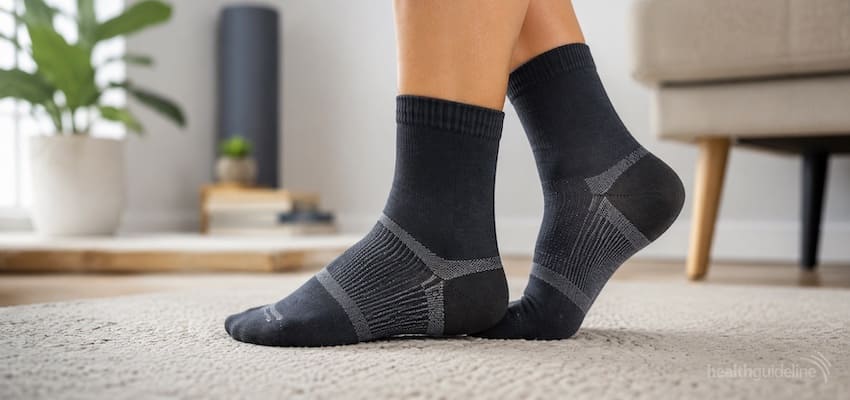
The OS1st FS6 foot sleeve is the best choice for most people because its targeted, six-zone compression supports the arch and heel yet stays thin enough to wear under socks all day.
Also great: Crucial Compression (best budget) and the Physix Gear 20-30 mmHg knee-high sock (best for swelling from standing all day). One honest caveat up front: compression socks are a comfort-and-support aid, not a cure — they work best alongside stretching and supportive shoes.
If your first steps out of bed feel like a nail in the heel, you’re dealing with one of the most common foot complaints there is. Compression socks and sleeves won’t fix plantar fasciitis on their own, but the right pair can take pressure off the arch, calm swelling, and make a long day on your feet a lot more bearable. Below are seven genuinely useful, currently-available options — spanning targeted foot sleeves, full compression socks, and cushioned arch bands — with honest pros, cons, and who each one is (and isn’t) for.
What are the best compression socks for plantar fasciitis?
For most people, the best all-round option is a targeted foot sleeve like the OS1st FS6, which places graduated compression right across the arch and heel while staying thin enough to wear inside shoes. Budget shoppers do well with Crucial Compression, and anyone whose legs swell from standing may prefer a firm knee-high graduated sock.
How we chose
We prioritized products that are real and currently sold on Amazon (US), with compression targeted at the arch and heel where plantar fasciitis pain concentrates. We looked for breathable, low-profile designs that fit inside everyday shoes, a spread of form factors and budgets, and brands with an established track record. Product details come from current Amazon listings; guidance on plantar fasciitis itself is drawn from medical authorities including Mayo Clinic and Cleveland Clinic. We treat compression socks as a supportive comfort aid, not a stand-alone treatment.
Top picks at a glance
| Product | Best for | Type & compression | Approx. price | Link |
|---|---|---|---|---|
| OS1st (OrthoSleeve) FS6 | Best overall | Toeless foot sleeve · graduated (6-zone) | ~$25–30 | View on Amazon |
| Crucial Compression | Best budget | Open-toe ankle sleeve · light–moderate | ~$10–15 | View on Amazon |
| SB SOX Plantar Fasciitis | Best low-profile for shoes | Toeless arch sleeve · light–moderate | ~$12–16 | View on Amazon |
| Physix Gear 20-30 mmHg | Best for swelling / standing all day | Knee-high sock · firm, graduated 20-30 mmHg | ~$15–25 | View on Amazon |
| Copper Compression Foot Sleeves | Best thin copper sleeve | Open-toe sleeve · copper-infused · light–moderate | ~$15–20 | View on Amazon |
| Copper Fit ICE | Best for a cooling feel | Foot & ankle sleeve · menthol-infused · light | ~$13–15 | View on Amazon |
| Dr. Scholl's Arch Support Sleeve | Best cushioned band from a trusted brand | Arch band · foam pad + compression band | ~$11–20 | View on Amazon |
01 / BEST OVERALL
OS1st (OrthoSleeve) FS6 Compression Foot Sleeves
The OS1st FS6 (also sold under the OrthoSleeve name) is a toeless foot sleeve that uses patented six-zone graduated compression to gently support the arch and heel as you move. It’s thin, breathable, and worn under regular socks inside shoes, which makes it the most versatile all-day pick for the majority of plantar fasciitis sufferers.
Key features
- patented Compression Zone Technology with six graduated zones
- soft, moisture-wicking, anti-odor fabric
- low-profile toeless design
- from a foot-focused brand established in 2008.
Pros
- targeted arch-and-heel support
- thin enough for any shoe
- breathable
- can be worn day or night
- well-established, widely used for plantar fasciitis.
Cons
- costs more than generic sleeves
- sizing is specific, so measure against the size chart
- toeless design leaves toes uncovered.
Best for: most people who want reliable, wear-anywhere support they can keep on all day.
02 / BEST BUDGET
Crucial Compression Plantar Fasciitis Socks
Crucial Compression’s open-toe sleeve is one of Amazon’s best-selling plantar fasciitis foot supports, with thousands of customer ratings and a price that usually lands around $10–15. It wraps the arch, heel, and ankle in snug, lightweight compression, making it the easiest low-cost way to find out whether compression helps your feet before spending more.
Key features
- open-toe ankle sleeve
- targeted arch, heel, and ankle support
- breathable lycra blend
- a small-business brand and long-running category best-seller.
Pros
- very affordable
- hugely popular
- breathable
- slips easily inside shoes.
Cons
- lighter support than firmer 20-30 mmHg options
- open-toe design won’t suit everyone
- you’ll want a couple of pairs to rotate through the wash.
Best for: budget-minded first-timers testing the waters with compression.
03 / BEST LOW-PROFILE FOR SHOES
SB SOX Plantar Fasciitis Compression Socks
SB SOX makes a slim, toeless arch-support sleeve designed to disappear inside most shoes. Instead of guessing by shoe size, you pick your size by measuring your arch circumference, which gives a more precise fit. The breathable fabric keeps feet cool through long days of standing, walking, or working.
Key features
- low-profile toeless sleeve
- sized by arch circumference (S 5–8″, M 7–10″, L 9–13″, XL 12–15″)
- breathable, snug fit that stays put
- small-business brand.
Pros
- precise, measure-to-fit sizing
- extremely low-profile
- breathable
- resists slipping and bunching.
Cons
- you’ll need a tape measure (shoe size alone isn’t enough)
- mild-to-moderate support only
- open toe.
Best for: people who want support hidden inside work or dress shoes.
04 / BEST FOR SWELLING AND STANDING ALL DAY
Physix Gear Compression Socks 20-30 mmHg
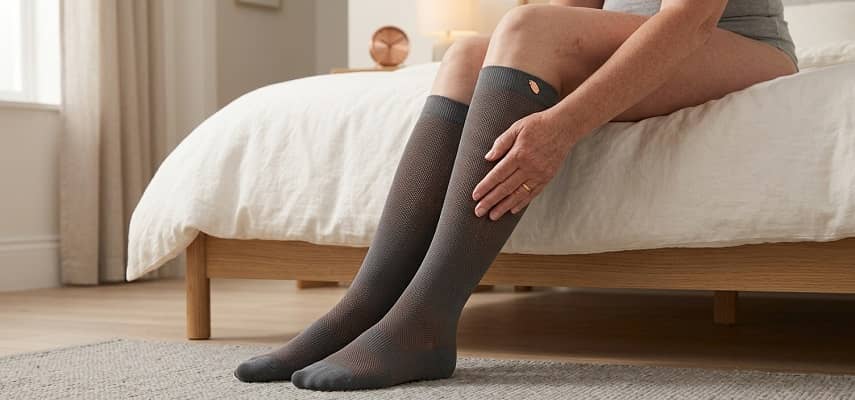
If your feet and lower legs swell during long shifts, a full knee-high graduated sock may serve you better than a foot sleeve. Physix Gear’s 20-30 mmHg socks apply firm graduated compression from the arch up to the calf to support circulation and reduce lower-leg swelling. They aren’t a plantar-fascia-specific brace, but the arch support and firmer compression suit many all-day standers.
Key features
- knee-high graduated compression rated 20-30 mmHg
- support from arch to calf
- moisture-wicking fabric
- a popular running and nursing sock.
Pros
- firm graduated compression
- helps swelling and circulation
- covers foot and calf together
- a solid pick for long hours on hard floors.
Cons
- not a targeted plantar fasciitis arch brace
- 20-30 mmHg feels genuinely tight, so size carefully
- full-length means warmer feet.
Best for: nurses, retail and warehouse workers, and others on their feet all day with lower-leg swelling.
Firm compression isn’t right for everyone — if you have diabetes, neuropathy, or a circulation condition, talk to a professional before wearing 20-30 mmHg socks. For more on full-length options, see our guides to knee-high compression socks and the best compression socks for swelling.
05 / BEST THIN COPPER SLEEVE
Copper Compression Foot Sleeves
Copper Compression’s foot sleeves wrap the arch and heel in a thin, copper-infused fabric engineered to wick moisture and resist odor. The slim build fits inside cleats, sneakers, dress shoes, or boots without adding bulk, so you can keep support on from morning to night. Each pack includes two sleeves that fit either foot.
Key features
- copper-infused, moisture-wicking fabric
- very thin, low-profile sleeve
- two sleeves per pack
- from a brand founded in 2014.
Pros
- breathable and odor-resistant
- slim enough for tight footwear
- recognizable brand.
Cons
- the idea that copper adds therapeutic benefit isn’t well supported by evidence — the real value is the compression and moisture control
- mild-to-moderate support
- open toe.
Best for: athletes and anyone wanting a thin in-shoe sleeve with good moisture management.
Prefer a full-length copper sock instead? See our roundup of copper compression socks.
06 / BEST FOR A COOLING FEEL
Copper Fit ICE Plantar Fascia Sleeve
Copper Fit ICE is a foot-and-ankle sleeve infused with menthol for a cooling sensation that many people find soothing on sore, tired heels. From a widely available retail brand, it combines light compression with that cooling feel, which makes it a nice pick for end-of-day relief after you’ve been on your feet.
Key features
- menthol-infused for a cooling sensation
- copper-infused fabric
- covers the foot and ankle
- from a mainstream retail brand.
Pros
- pleasant cooling feel
- easy to find
- light compression plus ankle coverage.
Cons
- the menthol cooling is a temporary comfort effect, not a treatment
- support is on the lighter side
- some people dislike the menthol scent.
Best for: anyone who likes a cooling sensation to wind down sore feet.
07 / BEST CUSHIONED BAND FROM A TRUSTED BRAND
Dr. Scholl’s Plantar Fasciitis Arch Support Sleeve
Dr. Scholl’s arch-support sleeve pairs a breathable compression band with a built-in foam pad and a non-slip sole to cushion and support the arch. From one of the most recognizable foot-care brands, it’s a low-profile band you can wear with shoes, barefoot around the house, or overnight — a good fit if you want a little extra cushioning under the arch.
Key features
- compression band with a foam arch pad and non-slip sole
- odor-neutralizing and washable
- unisex
- from a trusted household brand.
Pros
- added foam cushioning under the arch
- familiar, widely stocked brand
- wearable day or night
- non-slip base.
Cons
- the brand’s “clinically proven” and pain-relief claims are marketing — real-world results vary from person to person
- a foam band feels different from a full sleeve
- check the sizing before buying.
Best for: people who want extra arch cushioning and prefer a name they recognize.
What to look for when buying plantar fasciitis compression socks
Foot sleeve vs. full compression sock vs. arch band
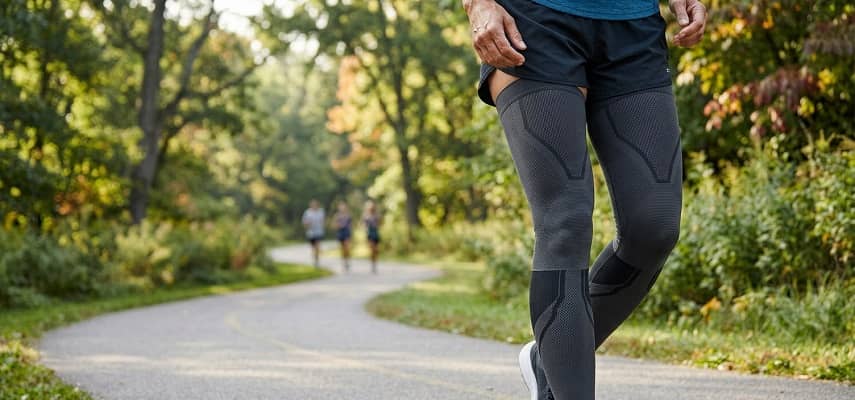
A toeless foot sleeve (like the OS1st FS6 or SB SOX) targets the arch and heel and is easy to wear inside any shoe — the most popular choice for plantar fasciitis. A full knee-high sock adds firmer, graduated compression up the calf, which helps if your lower legs swell. An arch band (like Dr. Scholl’s) is the most minimal, focusing cushioning and light compression on the arch alone. Match the form factor to whether your main problem is heel pain, swelling, or arch fatigue.
Compression level (mmHg)
Compression is measured in mmHg. 15-20 mmHg is mild — comfortable for all-day wear and mild swelling. 20-30 mmHg is firmer and offers more support and swelling control, but it feels noticeably tight and isn’t right for everyone. Many targeted foot sleeves don’t publish an mmHg figure because they rely on zoned rather than graduated compression; that’s fine for arch and heel support.
Open-toe vs. closed-toe
Most plantar fasciitis sleeves are open-toe, which keeps them cooler and lets you wear your own socks over the top. If you want your toes covered and warm, a full closed-toe compression sock is the better bet.
Material and breathability
Look for nylon/spandex or similar moisture-wicking blends, ideally with anti-odor treatment. Breathable fabric matters most if you’ll wear the sleeve inside shoes all day. Cotton-heavy socks tend to hold moisture and lose their stretch, so they’re worth avoiding for this job.
Fit and sizing
Fit makes or breaks compression. Follow each brand’s size chart, and for sleeves sized by arch circumference (like SB SOX), actually measure rather than guessing from shoe size. Firmer 20-30 mmHg socks are easy to size too small — if you’re between sizes or new to compression, sizing up usually feels better.
When you’ll wear them
Sleeves are made for daytime, on-your-feet support. For nighttime heel pain, a dedicated plantar fasciitis night splint holds the foot in a gentle stretch overnight and has stronger evidence behind it than a sock for morning pain.
About plantar fasciitis
The plantar fascia is a strong, ligament-like band of tissue that runs from your heel to the ball of your foot and helps form the arch. Cleveland Clinic explains that when this tissue is overused or overstretched it can become inflamed and painful to walk on. Plantar fasciitis is one of the most common causes of heel pain, and Mayo Clinic notes it classically causes stabbing pain with your first steps in the morning that eases as you move, then can return after long periods of standing or when you stand up after sitting.
Common risk factors include running and other high-impact activity, spending all day on your feet, exercising on hard surfaces, wearing unsupportive shoes, having flat feet or high arches, carrying extra weight, and being middle-aged. Left unaddressed, the way people limp or shift their weight to avoid heel pain can lead to knee, hip, or back pain, so it’s worth taking seriously early.
Do compression socks actually help plantar fasciitis?
Here’s the honest picture. The first-line treatments that medical authorities emphasize are rest and activity modification, calf and plantar-fascia stretching, supportive footwear and orthotics, ice, and over-the-counter pain relievers — and most cases improve with this kind of conservative care over several months. Compression socks and sleeves are a low-risk comfort and support aid used alongside those steps: they can ease discomfort, add arch support, and help with swelling, and many people find them genuinely soothing. But they are not a cure and shouldn’t replace stretching, better shoes, or professional advice. Think of them as one helpful tool rather than the whole treatment. Pairing them with the right plantar fasciitis insoles, supportive shoes, and a daily stretching habit gives you the best shot at relief.
When to see a professional
Compression socks are safe for most people, but see a doctor, podiatrist, or physical therapist if:
- Heel or foot pain lasts more than a week or keeps getting worse despite home care.
- You have numbness, tingling, significant swelling, or redness and warmth (which can signal something other than plantar fasciitis).
- The pain started after a specific injury, or is severe enough to stop you walking normally.
- You have diabetes, neuropathy, peripheral arterial disease, or another circulation condition — check with a professional before using compression, and be cautious with firmer or overnight compression.
Frequently asked questions
Do compression socks help plantar fasciitis?
They can help with comfort and swelling, but they don’t cure plantar fasciitis. Compression sleeves add gentle arch and heel support and may ease day-to-day discomfort, which is why many people like them. For actual recovery, they work best alongside stretching, supportive footwear, rest, and — if pain persists — professional care.
What compression level is best for plantar fasciitis?
For full socks, 15-20 mmHg suits all-day comfort and mild swelling, while 20-30 mmHg gives firmer support but feels much tighter and isn’t right for everyone. Many targeted plantar fasciitis foot sleeves use zoned compression without a published mmHg rating, which is perfectly fine for arch and heel support.
Can I wear plantar fasciitis compression socks to bed?
Some sleeves are marketed for overnight wear, and light compression is generally low-risk. However, for morning heel pain specifically, a plantar fasciitis night splint that holds your foot in a gentle stretch has stronger evidence. Avoid firm compression overnight, and check with a professional first if you have circulation issues or diabetes.
Is a foot sleeve or a full compression sock better?
A toeless foot sleeve targets the arch and heel and fits easily inside shoes, making it the go-to for most plantar fasciitis pain. A full knee-high sock adds firmer graduated compression up the calf, which is better if your lower legs also swell from standing all day. Choose based on your main symptom.
How long does it take for compression socks to help?
Many people feel more comfortable the same day they start wearing a sleeve, since the support is immediate. Lasting improvement in plantar fasciitis, though, usually takes weeks to months of consistent conservative care. Wear the sleeve during activity, keep up daily stretching and supportive shoes, and give the tissue time to settle.
Are compression socks safe if I have diabetes or poor circulation?
Not automatically. Compression can be helpful for some people and risky for others with diabetes, neuropathy, or peripheral arterial disease. Because the safe compression level depends on your circulation and skin sensation, talk to a healthcare professional before using compression socks or sleeves so you get the right type — or find out if you should avoid them.
Medical disclaimer: This article is for general information only and is not medical advice. Talk to a qualified healthcare professional about your specific situation.