Tennis Shoes for Arch Support — 7 Best Picks for 2026
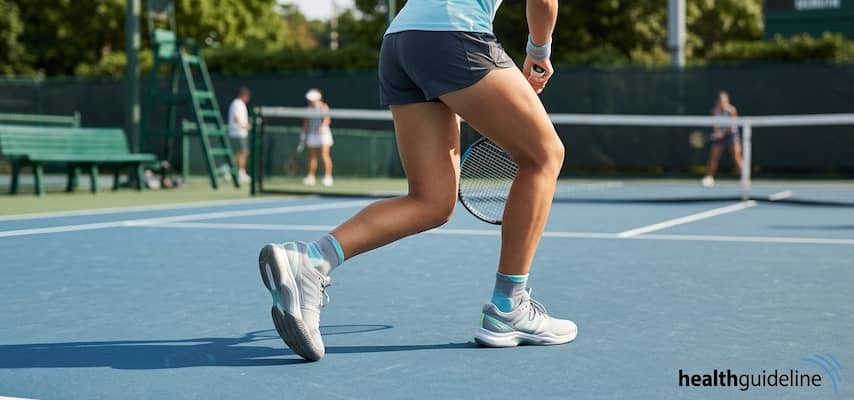
If you play tennis or pickleball with flat feet, high arches, or a history of plantar fasciitis, the wrong court shoe can turn every lateral push into a jolt through your arch. This guide covers the seven tennis shoes we rate most highly for arch support and stability in 2026 — spanning flat feet, high arches, plantar fasciitis, wide feet, and tight budgets — with honest pros, cons, and who each pair is (and isn’t) for.
Quick Picks
Best overall
ASICS Gel-Resolution X
Best value
ASICS Gel Challenger 15
Best for plantar fasciitis / heel cushioning
Mizuno Wave Enforce Tour 2
Best for wide feet
New Balance 996v5
A quick note on wording: “tennis shoes” here means true court shoes built for the sport. If you actually want an everyday walking or standing sneaker with arch support, a stability running shoe usually serves you better — see our guides to neutral vs. stability running shoes and running shoes for flat feet.
What are the best tennis shoes for arch support?
The best tennis shoes for arch support pair high torsional rigidity with a firm heel counter and a removable insole, so your foot stays centred during side-to-side movement. The ASICS Gel-Resolution X leads for all-around stability; the ASICS Gel Challenger 15 is the best value; and the Mizuno Wave Enforce Tour 2 adds the heel cushioning that eases plantar fasciitis.
How we chose
We prioritised the two things court shoes can do that insoles alone cannot: resist twisting (torsional rigidity) and lock the heel in place (heel-counter stiffness) — the same markers footwear labs such as RunRepeat use to score stability and ankle support. We then favoured models with a removable insole (so you can fit custom orthotics), honest width options, and proven outsole durability. Picks were cross-checked against independent lab and on-court testing and current availability; none of the links below carry an affiliate tag, so nothing here is placed to earn a commission.
Top picks at a glance
| Shoe | Best for | Key support feature | Approx. price | Link |
|---|---|---|---|---|
| ASICS Gel-Resolution X | Best overall support & stability | TPU DYNAWALL frame; reinforced arch/midsole/heel | ~$160 | Amazon |
| ASICS Gel Challenger 15 | Best value / beginners | WINGWALL side support; 5/5 torsional & heel rigidity | ~$110 | Amazon |
| Mizuno Wave Enforce Tour 2 | Plantar fasciitis / heel comfort | Rigid heel + pliable forefoot; broad stable base | ~$130 | Amazon |
| New Balance Fresh Foam X CT-Rally v2 | Max cushioning / high arches | Fresh Foam X shock absorption; roomy fit | ~$130 | Amazon |
| New Balance 996v5 | Wide feet (2E/4E) | Roomy widths; cushioned, breathable fit | ~$130 | Amazon |
| K-Swiss Ultrashot 4 | Durable value / roomier toe box | Supportive chassis; hard-wearing outsole | ~$120 | Amazon |
| Wilson Rush Pro 4.5 | All-around alternative | Balanced stability + comfort; secure midfoot | ~$120 | Amazon |
01 / BEST OVERALL FOR ARCH SUPPORT
ASICS Gel-Resolution X
The Gel-Resolution X is the most supportive court shoe we’d recommend for players who overpronate or simply want to feel locked in. Slice it apart and you find reinforcement through the arch, midsole and heel, anchored by a rigid TPU “DYNAWALL” frame that makes the shoe almost impossible to twist. On court that translates to a foot that stays centred through hard lateral pushes and slides.
Key features
- TPU DYNAWALL stability frame
- dual-density midsole (firmer for support, softer under the heel)
- DYNALACING lockdown
- wide 116 mm base
- AHAR+ outsole with a 6-month hard-court durability guarantee.
Pros
- Class-leading torsional and lateral stability
- genuinely durable
- secure, planted feel
- available in a 2E (wide) variant.
Cons
- Premium price
- the sock-like bootie and missing heel tab make it fiddly to pull on
- the tough upper runs warm and less breathable.
Best for: Overpronators, flat-footed players, and anyone who prioritises support and durability over featherweight speed.
Not ideal if: You want a light, breathable speed shoe or an easy step-in fit.
Value tip: The previous ASICS Gel-Resolution 9 is still widely sold, beloved for the same stability, and often cheaper — a smart way into the line.
02 / BEST VALUE
ASICS Gel Challenger 15
Don’t let the price fool you: in independent lab testing the Gel Challenger 15 earned top marks (5/5) for both torsional rigidity and heel-counter stiffness — support numbers that match shoes costing far more. Its WINGWALL sidewalls hold the foot firmly through quick cuts, and the outsole is built to outlast several seasons. At roughly $110, it’s our pick for beginners and anyone who wants real stability without the flagship price.
Key features
- WINGWALL lateral support
- rigid heel counter
- highly durable outsole
- secure midfoot foothold.
Pros
- Outstanding stability for the money
- very durable
- confident, planted feel
- beginner-friendly.
Cons
- Firm, court-connected ride with less plush cushioning
- not the shoe if you want a soft, high-stack feel underfoot.
Best for: Budget-minded and newer players who still want strong arch and ankle support.
Not ideal if: You have significant heel pain and need maximum cushioning (see the Mizuno below).
03 / BEST FOR PLANTAR FASCIITIS
Mizuno Wave Enforce Tour 2
Plantar fasciitis pain usually starts at the heel, so the ideal court shoe is stiff where it should be and forgiving where it shouldn’t. The Wave Enforce Tour 2 does exactly that: a rigid heel and broad, stable base keep you secure, while a more pliable forefoot lets the foot bend naturally at toe-off. That combination takes pressure off the plantar fascia without feeling wobbly on lateral moves.
Key features
- Wave-based stability plate
- rigid heel counter (top stiffness score)
- broad ~113 mm base
- flexible forefoot.
Pros
- Excellent balance of support and comfort
- secure heel hold
- forgiving flex for aching arches and heels.
Cons
- Heavier and stiffer than speed shoes
- stock can be intermittent
- breathability is average.
Best for: Players managing plantar fasciitis, heel pain, or general arch fatigue who still want court stability.
Not ideal if: You want the lightest, quickest shoe on court.
04 / BEST CUSHIONING (GREAT FOR HIGH ARCHES)
New Balance Fresh Foam X CT-Rally v2
High arches (which tend to under-absorb shock) reward cushioning, and the CT-Rally v2 delivers the softest landings of the court shoes here thanks to New Balance’s Fresh Foam X midsole. It’s roomy and comfortable enough for long sessions, making it a strong pick if your feet ache more from impact than from rolling inward. Pair it with a cushioned insole and it’s very kind to sensitive arches.
Key features
- Fresh Foam X cushioning
- generous underfoot protection
- comfortable court-to-casual fit
- removable insole.
Pros
- Best shock absorption in this list
- plush yet stable
- comfortable for all-day wear and lighter play.
Cons
- The softer platform is slightly less locked-down than a rigid stability shoe for aggressive sliders
- a touch heavier.
Best for: High-arched players and anyone who prioritises cushioning and comfort over maximum court feel.
Not ideal if: You’re a heavy overpronator who needs the firmest possible motion control.
05 / BEST FOR WIDE FEET
New Balance 996v5
New Balance is the brand to beat for width, and the 996v5 comes in 2E and 4E options that most tennis brands simply don’t offer. If narrow shoes leave your arch collapsing over the edge of the footbed or crush your toes on quick starts, the extra room here fixes both — while the cushioned, breathable build keeps longer matches comfortable. It’s a lighter, quicker feel than the ASICS stability shoes, with support that’s ample for most recreational players.
Key features
- Multiple widths (standard, 2E, 4E)
- cushioned midsole
- roomy toe box
- breathable upper.
Pros
- Genuine wide fit
- comfortable and light
- roomy toe box prevents cramping on fast stops and turns.
Cons
- Less aggressive motion control than the Gel-Resolution X
- durability is moderate rather than exceptional.
Best for: Wide-footed and high-volume-footed players who need room without losing support.
Not ideal if: You have narrow feet or are a heavy slider who wants a rigid stability chassis.
06 / BEST DURABLE VALUE WITH A ROOMIER FIT
K-Swiss Ultrashot 4
K-Swiss has built supportive, hard-wearing court shoes for decades, and the Ultrashot 4 continues that with a stable chassis, a tough outsole, and a naturally roomier toe box than most speed-focused rivals. It’s a sensible, comfortable pick for players who want dependable arch and lateral support at a mid-range price and appreciate a little extra forefoot space.
Key features
- Supportive midfoot chassis
- durable outsole
- cushioned heel
- roomier forefoot.
Pros
- Durable and stable
- comfortable, accommodating fit
- good value.
Cons
- Heavier and less nimble than lightweight shoes
- breathability is middling.
Best for: Players wanting long-lasting support and a bit more room, without paying flagship prices.
Not ideal if: You want a light, fast, low-to-the-court feel.
07 / BEST ALL-AROUND ALTERNATIVE
Wilson Rush Pro 4.5
If the ASICS and New Balance picks are sold out in your size, the Rush Pro 4.5 is the reliable fallback: a well-rounded shoe that balances stability, comfort, and durability without a weak spot. Its secure midfoot and firm heel give solid support for the price, and it plays well across recreational and club levels. If you overpronate heavily, drop in a supportive insole to top up the arch.
Key features
- Secure midfoot hold
- firm heel counter
- durable outsole
- balanced cushioning.
Pros
- Dependable all-rounder
- good stability-to-comfort balance
- solid value and durability.
Cons
- Medium width suits neutral-to-narrower feet best
- not the plushest or the most locked-down at the extremes.
Best for: Players who want one do-everything court shoe with respectable support.
Not ideal if: You need a true wide fit or maximum cushioning.
Do tennis shoes actually have good arch support?
Honestly, only up to a point. Court tennis shoes are engineered first for lateral (side-to-side) stability and outsole durability, not for the deep, moulded arch cradle you get in a dedicated stability running shoe. What a good tennis shoe gives you is a firm, twist-resistant platform and a locked-down heel that stop your arch from collapsing during play. For targeted arch support, the smartest move is to choose a shoe with a removable insole and add an arch-support insole or custom orthotic. See our guides to the best insoles for flat feet and plantar fasciitis insoles.
What to look for when buying tennis shoes for arch support
Torsional stability
Hold the shoe at the toe and heel and try to wring it like a towel. A supportive tennis shoe barely twists. This torsional rigidity is what keeps your arch from rolling inward on hard lateral pushes — the single most important feature for players who overpronate.
A firm heel counter
Pinch the back of the heel. If it collapses easily, the shoe won’t hold your heel in place. A stiff heel counter centres your foot, reduces excess motion, and takes strain off the plantar fascia.
Cushioning and heel-to-toe drop
Tennis shoes typically have a heel-to-toe drop of about 6–14 mm. A drop of at least 8 mm, plus real heel cushioning, helps reduce strain on the plantar fascia — useful if you have heel pain or high arches that don’t absorb shock well.
A removable insole
This is the arch-support cheat code. A removable insole lets you swap in an orthotic tuned to your exact arch height, which is far more effective than relying on a shoe’s built-in shape.
Width and fit
If your foot spills over the footbed, no amount of built-in support will help. Measure both feet (one is usually larger) and check width options — New Balance offers 2E/4E, ASICS Gel-Resolution comes in 2E, and K-Swiss tends to run roomier. Leave about a thumb’s width at the toe for quick stops.
Traction and durability
A grippy, hard-wearing outsole keeps you planted and prevents the mid-slide slips that stress your arches and ankles. Look for a durable rubber compound; ASICS, for example, backs many hard-court shoes with a 6-month outsole guarantee.
Which tennis shoes suit your arch type?
Knowing your arch helps you filter fast:
- Flat feet / overpronation (feet roll inward): prioritise maximum stability — the ASICS Gel-Resolution X or Gel Challenger 15. More on this in our guide to neutral vs. stability shoes.
- High arches / supination (feet roll outward, under-absorb shock): prioritise cushioning — the New Balance CT-Rally v2 or Mizuno Wave Enforce Tour 2, ideally with a cushioned insole. See shoes for supinators.
- Neutral arches: most picks here work; choose by fit, width, and budget.
Not sure? Check the wear pattern on an old pair — inner-edge wear near the big toe suggests overpronation; outer-edge wear suggests supination.
About arch support and your feet
An estimated 15–25% of adults have flexible flat feet, and many never have any symptoms at all, according to Harvard Health. When flat feet or overpronation do cause trouble, the strain can show up as heel or arch pain and is associated with issues such as shin splints, Achilles tendinitis, and plantar fasciitis. The right footwear — supportive shoes plus, where needed, orthotics — is a mainstay of managing these, but footwear is a comfort-and-support aid, not a cure. If you have persistent foot pain, numbness, a visibly changing arch, or pain that limits walking, see a podiatrist or doctor for an assessment and a plan suited to your feet. For related reading, see our overview of arch pain on the foot.
Frequently asked questions
Are tennis shoes good for plantar fasciitis?
They can be, if you choose carefully. Look for a firm heel counter, real heel cushioning, a drop of at least 8 mm, and a removable insole for an orthotic. The Mizuno Wave Enforce Tour 2 and New Balance CT-Rally v2 are the most plantar-fasciitis-friendly picks here. Persistent heel pain warrants a professional assessment.
Can I put my own orthotics or insoles in tennis shoes?
Yes — and it’s often the best way to get real arch support. Choose a shoe with a removable factory insole, take that insole out, and replace it with your arch-support insole or custom orthotic. Every shoe in this guide has a removable insole, so all of them can be customised.
What tennis shoes are best for flat feet and overpronation?
Prioritise stability: a shoe that resists twisting and holds the heel firmly. The ASICS Gel-Resolution X offers the strongest motion control here, and the ASICS Gel Challenger 15 delivers similar stability for less. Adding a supportive insole further limits inward rolling of the arch.
Which tennis shoes are best for high arches?
High arches tend to absorb shock poorly, so favour cushioning over motion control. The New Balance Fresh Foam X CT-Rally v2 gives the softest landings in this list, and the Mizuno Wave Enforce Tour 2 balances cushioning with support. A cushioned insole adds extra comfort under a rigid arch.
How do I know if I need arch support?
Common signs include arch or heel pain, tired or achy feet after standing or playing, and uneven shoe wear. If your feet roll noticeably inward or outward, or you have flat feet or high arches, added arch support usually helps. For pain that persists or worsens, ask a podiatrist rather than self-treating.
How often should I replace tennis shoes?
Replace them when the outsole tread goes smooth or the support feels dead underfoot — for regular players that’s often every 6–12 months, though durable models like the ASICS Gel-Resolution X can last longer. Worn, unsupportive shoes are a common trigger for arch and heel pain.
Medical disclaimer: This article is for general information only and is not medical advice. Talk to a qualified healthcare professional about your specific situation, especially for persistent or severe foot pain.