Aircast Air-Stirrup Ankle Brace Review : Best Alternatives (2026)
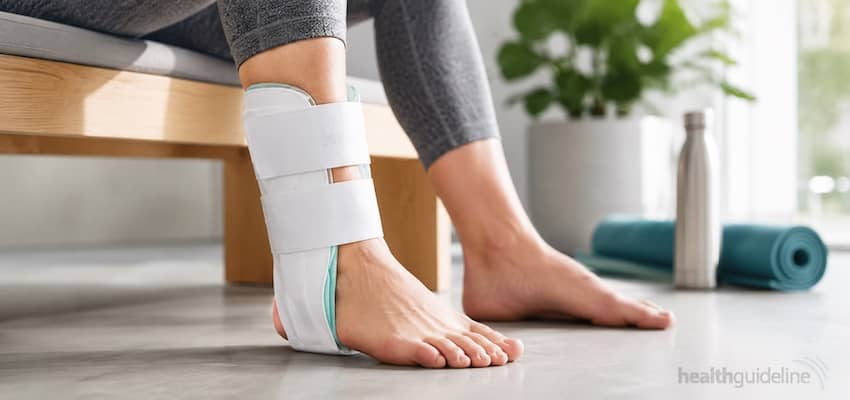
The Aircast Air-Stirrup is the pick when you need firm side-to-side ankle control after a sprain. Its semi-rigid shells and pre-inflated aircells give more stability than taping while still allowing you to walk. It is not the slimmest brace, so the A60, AirSport or a lace-up Med Spec ASO may be a better fit for sport or all-day shoe wear.
Quick Picks
Firm stabilization
Aircast Air-Stirrup
Semi-rigid shells and aircell compression for recovery after a sprain.
Prevention / daily wear
Aircast A60
Very slim, single-strap support for chronic rollers and re-sprain prevention.
How we chose
We prioritized braces available on Amazon in the United States that match a recognized level of ankle-sprain support and are widely used by clinicians, athletes or both. We weighed stability versus injury grade, fit inside normal shoes, ease of application, breathability, washability and honest owner feedback. Where a brace has an in-depth review on this site, it is linked below. We do not accept payment to feature products, and all product links supplied in this article are plain Amazon URLs.
Top picks at a glance
| Brace | Best for | Support level | Standout feature | Approx. price* |
|---|---|---|---|---|
| Aircast Air-Stirrup | Firm stabilization after a sprain | High (rigid) | Semi-rigid shells + graduated aircell compression | ~$30-$45 |
| Aircast A60 | Prevention & low-profile daily wear | Mild-moderate | 60° stabilizer, single strap, very slim | ~$30-$50 |
| Aircast AirSport | Active recovery / return to sport | Moderate | Step-in shell + ATF cross-strap | ~$45-$70 |
| Med Spec ASO | Adjustable all-day lace-up support | Moderate-high | Lace-up + figure-eight stabilizing straps | ~$30-$45 |
| Zamst A2-DX | High-impact court sports | High | X-strap system, strong lateral lockdown | ~$40-$70 |
| McDavid Lace-Up (195) | Budget tape alternative | Moderate-high | Removable stays, value-focused | ~$20-$35 |
| Bauerfeind Sports Ankle Support | Slim compression & comfort | Mild-moderate | 3D-knit sleeve + gel malleolar pads | ~$50-$70 |
Is the Aircast Air-Stirrup good for a sprained ankle?
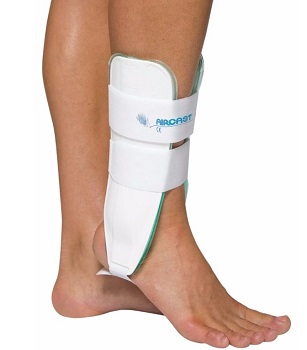
Yes – for the right injury. The Aircast Air-Stirrup is a semi-rigid brace built for firm side-to-side ankle control while you recover from a sprain. Its two hard anatomical shells resist inward and outward rolling more than taping, while pre-inflated aircells add graduated compression to help with swelling. Normal up-and-down flexion stays largely free, so you can keep walking.
In its patient guide on sprained ankles, the American Academy of Orthopaedic Surgeons lists a removable plastic device such as a walking boot or an aircast brace as a typical support option for a moderate (Grade 2) sprain. DJO/Aircast notes that the Air-Stirrup has been used for functional ankle management since 1978. It can be used across Grade 1-3 sprains, chronic instability and post-operative support, though a severe Grade 3 injury usually needs medical evaluation and often a boot or cast rather than a brace alone.
01 / FIRM STABILIZATION
Aircast Air-Stirrup Ankle Brace
The Air-Stirrup pairs semi-rigid, anatomically shaped shells with a patented Duplex aircell system: two pre-inflated overlapping cells for graduated compression. It is ready to strap on, latex-free and low-profile for a rigid recovery brace.
Pros
- Strong medial and lateral stability
- Clinically familiar; compression helps reduce swelling
- Durable shell with near-normal flexion for walking
Cons
- Bulkier than sleeves or lace-ups
- May not fit narrow or low-profile shoes
- Not an agility brace for cutting sports
Best for: Acute or moderate sprains, early functional recovery, chronic instability and post-op support where firm control matters more than slimness.
Who it is not for: Athletes wanting a slim in-shoe brace for fast direction changes, or very wide feet that may find the opening tight.
Sizing: The classic Air-Stirrup comes in Pediatric, Small, Medium and Large and is left- or right-specific. A one-size Air-Stirrup Universe version fits either foot if you are unsure.
Aircast Air-Stirrup vs. A60 vs. AirSport: what’s the difference?
All three are made by Aircast, but they sit at different points on the support scale. The Air-Stirrup is the most rigid and stabilizing. The A60 is the slimmest and most preventive. The AirSport sits in the middle for active recovery. If the rigid Air-Stirrup feels like too much brace for your day, one of the other two is usually the answer.
02 / PREVENTION & DAILY WEAR
Aircast A60
The A60 is a lightweight slip-on with a stabilizer molded at a 60° angle on each side and a single hook-and-loop strap. It is low-profile enough to disappear inside most shoes, making it a strong option for chronic rollers and for preventing re-sprains during sport. The trade-off is milder support than the Air-Stirrup, so it is not the pick for a fresh, painful sprain.
Pros
- Very slim in-shoe fit
- Quick single-strap on and off
- Breathable; good for prevention and agility
Cons
- Milder support than the Air-Stirrup
- Some users size down for more compression
- Slow to dry after washing
Best for: Prevention, chronic mild instability and daily in-shoe wear.
03 / ACTIVE RECOVERY
Aircast AirSport
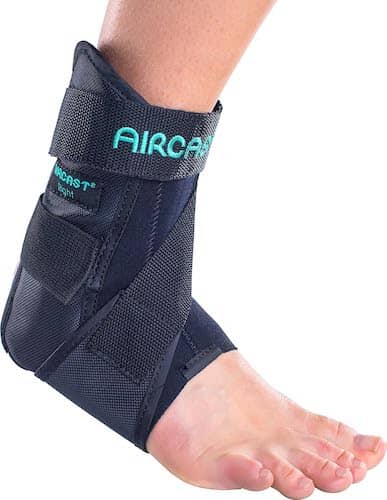
The AirSport keeps Air-Stirrup-style aircell support in a step-in, foam-filled shell with an anterior talofibular cross-strap and forefoot and shin wraps for extra stabilization. It is aimed at active people recovering from a Grade 1-2 sprain, or preventing the next one, who want more than the A60 without going fully rigid.
Pros
- Moderate support with compression
- ATF strap adds ligament stability
- Fast step-in application and a low profile
Cons
- Slightly bulkier and pricier than the A60
- Not maximal support for a severe injury
Best for: Active recovery or prevention when you want more structure than a low-profile A60.
Best non-Aircast alternatives
Rigid shells are not for everyone. If you prefer a lace-up you can dial in, sport-specific lockdown, a budget option or a slim compression sleeve, these four are worth considering. For a wider view, compare our roundups of semi-rigid ankle braces and the best lace-up ankle braces.
04 / ADJUSTABLE LACE-UP
Med Spec ASO
The ASO is widely treated as the industry-standard lace-up: ballistic nylon with figure-eight stabilizing straps that mimic athletic taping and adjust to the tightness you want. It is comfortable enough for all-day wear and on-your-feet jobs, and is a common choice for returning to sport after a sprain.
Pros
- Highly adjustable and comfortable for long wear
- Figure-eight straps mimic athletic taping
- Trusted across teams
Cons
- Laces take longer than a strap
- Less rigid control than the Air-Stirrup for a fresh severe sprain
- Can bunch in very low shoes
Best for: Adjustable all-day support and gradual return to sport.
05 / COURT SPORTS
Zamst A2-DX
The A2-DX sits at the high end of Zamst’s lineup, with an X-shaped strap system and anterior, lateral and medial support that noticeably restricts rolling. Basketball and volleyball players who cut and land constantly often reach for it. Left and right are sold separately.
Pros
- Strong lateral lockdown for cutting sports
- X-straps hold position
- Trusted by athletes and trainers
Cons
- Premium price
- Straps can run short for large feet
- Some report Velcro wear over time and reduced ankle feel
Best for: High-impact court sports and strong lateral control during cuts and landings.
06 / BUDGET LACE-UP
McDavid Lace-Up (195)
McDavid’s ballistic-nylon lace-up with removable stays delivers tape-like support at a lower price. The brand’s lifetime guarantee is a useful bonus, and it is a sensible everyday option while rehabbing a Grade 1-2 sprain if you do not want to spend on a premium brace.
Pros
- Affordable moderate-to-high support
- Removable stays and breathable tongue
- Lifetime-guarantee value
Cons
- Metal stays can dig in narrow or low-cut shoes
- Laces take time
- Less rigid than a hard shell
Best for: Budget-conscious rehabilitation of a Grade 1-2 sprain.
07 / SLIM COMPRESSION SLEEVE
Bauerfeind Sports Ankle Support
If you mainly want comfort, mild support and help with everyday achiness or swelling, Bauerfeind’s medical-grade 3D-knit sleeve with gel pads over the ankle bones is the slimmest option here. It is not a mechanical stabilizer for a moderate or severe sprain, but it can be excellent for mild instability and daily wear.
Pros
- Slim, breathable and comfortable
- Gel pads cushion the ankle bones
- Good for mild support and swelling
Cons
- Least mechanical stability of this group
- Premium price
- You must measure for the right size
Best for: Mild instability, everyday achiness or swelling when slim comfort is the priority.
What to look for when buying an ankle brace
Match support to your injury
The bigger the injury, the more support you generally want. A slim sleeve or the A60 suits mild instability and prevention; a rigid Air-Stirrup or firm lace-up suits a moderate sprain or recurring instability; and a genuinely severe injury often needs a walking boot and medical guidance rather than a brace alone.
Rigid shell vs. lace-up vs. sleeve
Rigid shells such as the Air-Stirrup give the firmest side-to-side control. Lace-ups such as the ASO and McDavid let you fine-tune tightness and can be comfortable all day. Compression sleeves such as Bauerfeind are the slimmest and most comfortable but offer the least mechanical stability. A hinged brace is another middle-ground option.
Will it fit in your shoes?
This is where the Air-Stirrup trips people up. Check the brace against the actual shoes you will wear: rigid and lace-up braces need more room, while slim options such as the A60 fit low-profile shoes far more easily. If you need support specifically for running, see our guide to the best ankle braces for running.
Size, side, breathability & washing
Measure before you buy, and note whether the brace is left/right-specific: the classic Air-Stirrup and Zamst are. Look for breathable materials if you will wear it for hours, and check how long it takes to dry. Some slip-on braces are slow to air-dry, so a spare can be worthwhile.
Understanding ankle sprains (and where a brace fits)
An ankle sprain happens when the ligaments that hold the joint together are stretched or torn, usually from the ankle rolling inward. Clinicians generally describe three grades: Grade 1, a mild stretch with minimal instability; Grade 2, a partial tear with some instability; and Grade 3, a complete tear with significant instability. Pain, swelling and bruising are common to all three.
For early care, most authorities point to Rest, Ice, Compression and Elevation in the first days after injury, alongside protecting the joint. According to the American Academy of Orthopaedic Surgeons, a Grade 2 sprain is often supported with a removable device such as a walking boot or aircast brace, while a Grade 3 sprain may need a short period in a cast or cast-brace and medical follow-up. The Cleveland Clinic similarly describes bracing, wraps or splints as ways to relieve swelling and keep pressure off the joint while it heals, with physical therapy to rebuild strength and balance. A semi-rigid brace such as the Air-Stirrup complements proper care and rehab; it does not replace them.
When to see a professional
A brace is not a diagnosis. See a qualified healthcare professional promptly if any of the following apply:
- You cannot put weight on the ankle or walk, immediately after the injury or after a few days of home care.
- There is severe pain, an obvious deformity or you heard a pop at the time of injury.
- You have numbness, tingling, or the foot and toes look pale, cold or bluish.
- Swelling and pain are not improving after a few days, or symptoms persist beyond 6-8 weeks.
- You have diabetes, poor circulation, reduced sensation, or are pregnant – get individual advice before self-treating.
When in doubt, get it checked. It can be hard to tell a bad sprain from a fracture without an X-ray.
Frequently asked questions
How long should you wear an Aircast Air-Stirrup?
It depends on your injury and clinician’s advice, not a fixed rule. Braces are often worn through early recovery and during a gradual return to activity, then weaned as strength and balance improve. Prolonged immobilization can cause stiffness, so follow professional guidance on when to reduce use.
Can you walk in an Air-Stirrup?
Yes. The rigid shells limit side-to-side rolling while leaving normal up-and-down flexion largely free, so you can keep moving during recovery. Wear it with a supportive shoe; it is not a performance brace for cutting sports.
Does the Aircast Air-Stirrup fit inside a shoe?
It is designed to be low-profile, but is bulkier than a sleeve or lace-up, so fit varies by shoe. It works best with a roomy, supportive sneaker and can be tight in narrow or low-cut shoes. If in-shoe slimness is your priority, the Aircast A60 fits far more easily.
Is the Air-Stirrup or a lace-up brace better?
Neither is universally better: they solve different problems. The rigid Air-Stirrup gives firmer side-to-side stability, which many prefer for a fresh moderate sprain. A lace-up such as the ASO offers adjustable, all-day comfort and is popular for returning to sport. Choose based on your injury, comfort and shoes.
How do I choose the right size and side?
The classic Air-Stirrup comes in Pediatric, Small, Medium and Large and is specified for the left or right foot, so measure and select carefully. If you are unsure, the one-size Air-Stirrup Universe fits either foot. When between sizes, compare your measurement with the manufacturer’s size chart before ordering.
Can an ankle brace prevent future sprains?
Bracing during higher-risk activity is a commonly recommended way to help protect an ankle prone to rolling, especially after a previous sprain. It works best alongside strengthening and balance exercises. A brace lowers risk during activity; it is not a guarantee, and rehabilitation remains important.
Medical disclaimer: This article is for general information only and is not medical advice. Talk to a qualified healthcare professional about your specific situation.