Ultra Zoom Ankle Brace Review + 4 Best Alternatives (2026)
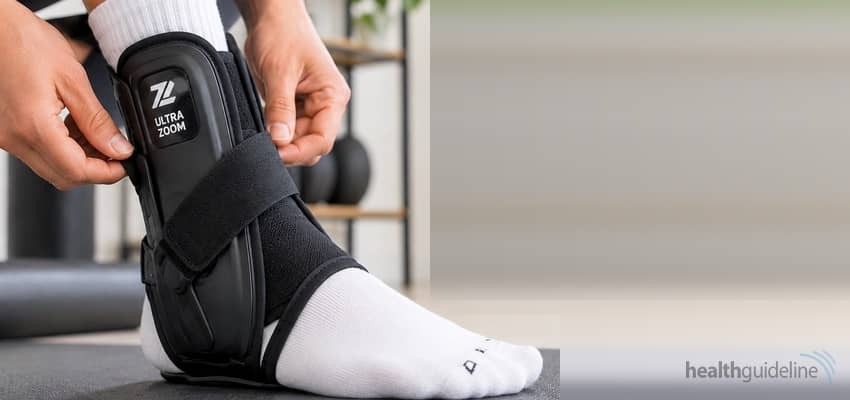
An ankle brace is one of the simplest ways to stay active while protecting a joint that has rolled, sprained, or just feels wobbly. This guide gives you an honest look at the Ultra Zoom ankle brace — the heavy-duty hinged brace this page has long covered — and then lines it up against four alternatives that physical therapists and athletic trainers reach for, so you can match the right level of support to your sport, your sprain history, and the shoes you actually wear.
Quick picks
Best overall for protected mobility
Ultra Ankle Ultra Zoom
Near-maximal stability that still lets the ankle move; great for court sports and chronic instability.
Best value / most trusted lace-up
Med Spec ASO Ankle Stabilizer
The athletic-trainer standard; fits in most shoes.
Best low-profile for everyday
Aircast A60
On in seconds, minimal bulk.
Best for high ankle sprains & serious sport
Zamst A2-DX
Rigid guards for the toughest support.
Best lightweight for sports
McDavid 195 Ultralight
Breathable figure-8 support.
How we chose
We cross-referenced independent expert testing and clinical guidance — including podiatrist- and physical-therapist-backed roundups from CNN Underscored and Garage Gym Reviews, plus published guidance from sports-focused podiatry practices — with each manufacturer’s own specifications. Every product below was verified as currently sold on Amazon (US) at the time of writing. We prioritized the balance of support and mobility, secure fit, durability, breathability, and real-world sizing feedback. This article is informational and is not medical advice.
Top ankle braces at a glance
| Brace | Best for | Type & support | Approx. price* |
|---|---|---|---|
| Ultra Ankle Ultra Zoom | Court sports, chronic instability, protected mobility | Hinged-cuff · maximal | ~$110–130 |
| Med Spec ASO | Best value; sprain recovery & everyday | Lace-up (figure-8) · moderate | Budget (often under $50) |
| Aircast A60 | Low-profile everyday wear & prevention | Semi-rigid stirrup · mild | ~$30–55 |
| Zamst A2-DX | High ankle sprains; serious athletes | Rigid guards + straps · maximal | ~$60–85 |
| McDavid 195 Ultralight | Lightweight, breathable sport support | Lace-up (figure-8) · moderate | ~$25–40 |
01 / Best overall for protected mobility
Ultra Ankle Ultra Zoom — Best overall for protected mobility
The Ultra Zoom is a hinged-cuff brace that delivers near-maximal stability while still letting your ankle bend naturally, so you can cut and jump without feeling locked up. Its heat-moldable shell restricts the inward rolling and twisting behind most sprains, making it a strong pick for court sports and chronic instability.
Made by Ultra Ankle (and also sold under the Breg label), the Ultra Zoom is built around a Performathane soft shell that uses body heat to form-fit to your ankle over a short break-in period, plus a padded liner and a hinged cuff. Unlike a traditional lace-up ankle brace, it’s designed to help control the higher twisting forces linked to high ankle sprains — not just the low, side-to-side roll.
Key features:
- Heat-moldable Performathane shell
- PerformaFit padding
- hinged-cuff design for natural up-and-down motion
- wears on either ankle initially
- low-profile once molded.
Pros:
- Excellent stability with genuine freedom of movement
- helps guard against both low and high ankle sprains
- durable across multiple seasons
- strong option for repeat sprains.
Cons:
- Needs a short break-in period
- takes up more room in the shoe (loosen laces or size up)
- premium price
- won’t fit shoes smaller than a women’s 6 / men’s 7.
Best for: Basketball, volleyball, soccer and similar jumping/cutting sports, and anyone with chronic ankle instability who wants maximum support without a rigid, taped-up feel. New to this style? See our hinged ankle brace guide and picks for an ankle brace for basketball.
Ultra Ankle Ultra Zoom — view on Amazon
Sizing the Ultra Zoom
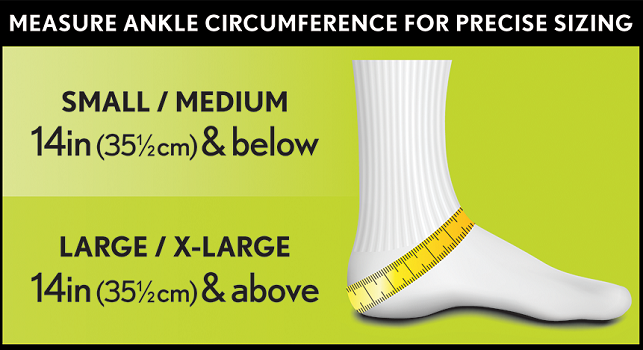
Ultra Zoom sizing is based on ankle circumference, not shoe size: measure around your ankle and choose S/M for under 14 inches or L/XL for over 14 inches. If you measure right at 14 inches, size down to S/M for a snug fit.
02 / Best value and most trusted lace-up
Med Spec ASO Ankle Stabilizer — Best value and most trusted lace-up
The Med Spec ASO is the lace-up brace most athletic trainers reach for. Figure-8 stabilizing straps mimic athletic taping to limit the ankle rolling, and the low-profile boot slips into most shoes. It offers dependable moderate support for sprain recovery, chronic instability, and daily wear at a budget-friendly price.
The ASO is frequently described by clinicians as a go-to for ankle support, and it fits either foot. Its ballistic-nylon boot and angled straps strike a well-liked balance between firm control and freedom to move. We cover it in depth in our ASO ankle brace review.
Key features:
- Figure-8 stabilizing straps
- elastic cuff closure for compression
- spacer-mesh tongue
- bilateral (fits left or right)
- low-profile boot.
Pros:
- Trusted by trainers and clinicians
- adjustable, dependable moderate support
- fits in most athletic shoes
- affordable
- durable for everyday and seasonal use.
Cons:
- Straps need re-tightening each wear and can loosen during hard play
- can feel bulky in slim or dress shoes
- not as rigid as a stirrup or hinged brace for severe instability.
Best for: Most people returning from a Grade 1–2 sprain, chronic-instability prevention during sport, and value seekers. Also useful for peroneal tendonitis support.
Med Spec ASO Ankle Stabilizer — view on Amazon (select your size/color on the listing)
03 / Best low-profile brace for everyday wear and prevention
Aircast A60 — Best low-profile brace for everyday wear and prevention
The Aircast A60 is a low-profile stabilizer you can put on in seconds with a single strap. Rigid supports molded at a 60-degree angle guard against rolling while still allowing normal up-and-down motion. It’s best for mild support, everyday prevention, and slipping unobtrusively into athletic shoes.
The A60 uses breathable Breath-O-Prene fabric and a slim anatomical shape, and it’s even rated to be worn in water. It gives a lighter level of support than a full lace-up or rigid brace — read our full Aircast A60 review, or compare it with other semi-rigid ankle braces.
Key features:
- Stabilizers molded at a 60° angle on each side
- single-strap application
- Breath-O-Prene fabric
- low-profile, waterproof design.
Pros:
- Fast to put on
- minimal bulk under shoes
- breathable and cool
- good for prevention and mild chronic instability.
Cons:
- Mild support only — not for moderate-to-severe sprains
- sold by specific size and foot (it can run small, so check the size chart)
- some users report the fabric or shell wearing with heavy long-term use.
Best for: Everyday prevention, mild instability, and athletes who want a barely-there brace. Pair with sneakers with ankle support for extra confidence.
Aircast A60 Ankle Support — view on Amazon (choose your size and left/right foot)
04 / Best for high ankle sprains and serious athletes
Zamst A2-DX — Best for high ankle sprains and serious athletes
The Zamst A2-DX is a rigid, ankle-specific brace built for the toughest support needs. Molded exterior guards plus X-straps lock down inward, outward, and forward movement, and it’s one of the few braces designed to help with high ankle sprains. It’s the choice for serious athletes and moderate-to-severe instability.
Zamst’s a-Fit/i-Fit construction makes left- and right-specific braces, and anti-migration grip keeps it from sliding in the shoe. It’s a favorite among basketball and volleyball players who need firm stabilization. See our full Zamst A2-DX review for details.
Key features:
- Dual molded exterior guards
- X-strap stabilizers
- anti-migration grip
- anatomically correct left/right fit
- breathable build.
Pros:
- Very strong, firm stabilization
- helps protect against high ankle sprains as well as standard rolls
- trusted by competitive athletes
- durable.
Cons:
- Rigid and can feel stiff or bulky
- may not fit in slim shoes
- left/right specific (order the correct one)
- higher price
- short break-in.
Best for: Moderate-to-severe sprains, high ankle sprains, and high-impact sports. Not sure a brace is enough after a bad sprain? See walking boots for sprained ankles.
Zamst A2-DX Ankle Brace — view on Amazon (select left or right and your size)
05 / Best lightweight brace for sports
McDavid 195 Ultralight — Best lightweight brace for sports
The McDavid 195 Ultralight is a breathable lace-up whose figure-8 straps simulate athletic tape for solid, lightweight support. You can re-tighten the straps without unlacing or removing your shoe. It’s a comfortable, lower-bulk option for sports and everyday wear when you need moderate protection rather than rigid stabilization.
Built from a single layer of polyester to keep weight and bulk down, the 195 uses a figure-6 strapping pattern plus a compression top strap. McDavid points to an independent university study in which athletes wearing the brace had roughly three times fewer injuries; treat that as a manufacturer-cited figure rather than an independent guarantee. It’s a great everyday and running-friendly ankle brace option.
Key features:
- Figure-8/figure-6 strapping that mimics tape
- single-layer polyester for low weight
- adjustable without unlacing
- padded lining and reinforced closures.
Pros:
- Lightweight and breathable
- easy to re-tighten on the fly
- lower-profile than rigid braces
- affordable.
Cons:
- Moderate (not rigid) support
- straps can loosen and need re-cinching
- less structured than a stirrup or hinged brace for significant instability.
Best for: Athletes who want dependable, low-bulk support for basketball, volleyball, soccer, and running, or anyone stepping down from a bulkier brace.
McDavid 195 Ultralight Ankle Brace — view on Amazon (select your size)
How to choose an ankle brace
Match the support level to your need
More support usually means less freedom and more bulk, so pick the lightest brace that covers your situation. Mild, occasional aches or prevention call for a sleeve or a low-profile stabilizer; an active sprain, repeated rolling, or chronic instability calls for a firm lace-up, stirrup, or hinged brace.
Know the four main brace types
A compression sleeve gives warmth and light support for very mild needs. A lace-up brace (like the ASO or McDavid 195) offers adjustable, moderate support and fits most shoes. A semi-rigid stirrup (like the Aircast A60) resists rolling with low bulk. A hinged brace (like the Ultra Zoom) or rigid guard brace (like the Zamst A2-DX) gives the most protection while preserving up-and-down motion.
Get the fit and size right
Most braces size by ankle circumference, not shoe size. Measure around the narrowest part of your ankle and follow the size chart; if you’re between sizes, most brands suggest going smaller for a snug fit. Note whether a brace is bilateral (fits either foot) or left/right specific before ordering.
Leave room in your shoe
Slim braces fit in normal shoes, but rigid and hinged braces need space. Loosen your laces fully, insert your foot with the brace on, then re-tighten from the toes up. Some people size up half a shoe size for the bulkier options.
Consider your sport and durability
High-impact, cutting, and jumping sports benefit from firmer stabilization; long days on your feet favor breathability and comfort. Look for anti-migration features so the brace stays put, and check that the materials will hold up to how often you’ll wear it.
About ankle sprains and instability
Most ankle sprains happen when the foot rolls inward (an inversion sprain), which stresses the ligaments on the outside of the ankle; podiatry sources attribute the large majority of sprains — often cited at around 85% — to this motion. A less common but more stubborn “high ankle sprain” involves the ligaments above the joint and the twisting forces a hinged or rigid brace is designed to help control.
Sprains are common, and they can recur: podiatrists estimate that roughly 40% of people who suffer an acute ankle sprain go on to develop some degree of chronic ankle instability. A brace provides external support to compensate for stretched ligaments and to reduce the feeling of “giving way,” but it works best as one part of recovery — not the whole plan. Clinicians generally recommend pairing bracing with strengthening and balance work, and reserving the brace for higher-risk activity rather than wearing it around the clock indefinitely. Think of a brace as a tool that buys you stability while you rebuild the ankle’s own strength and coordination.
When to see a professional
An ankle brace can support a mild, healing ankle, but some symptoms need a proper evaluation. Consider seeing a doctor, physical therapist, or podiatrist if you notice any of the following:
- You can’t put weight on the foot or take more than a few steps.
- There’s severe swelling, significant bruising, or a visible deformity.
- You feel numbness, tingling, or the ankle repeatedly “gives way.”
- Pain isn’t improving after a few days of rest and self-care, or it’s getting worse.
A professional can pinpoint the cause, rule out a fracture or other injury, and recommend the right brace and rehab for your specific situation. This article is for general information only and is not medical advice.
Frequently asked questions
Is the Ultra Zoom ankle brace worth it?
For athletes with repeated sprains or chronic instability, many find the Ultra Zoom worth the higher price because it combines strong stabilization with natural movement and lasts multiple seasons. If your needs are mild or occasional, a lace-up like the ASO may give you enough support for less money.
Ultra Zoom vs. a lace-up brace like the ASO — which should I choose?
Choose the hinged Ultra Zoom if you want maximal protected mobility for jumping and cutting sports or have chronic instability. Choose a lace-up ASO if you want a lower-profile, budget-friendly brace that fits easily in most shoes and offers dependable moderate support. Your sport, sprain history, and shoe room should guide the call.
Do ankle braces weaken your ankle, and can I wear one every day?
Bracing itself doesn’t weaken the ankle, but relying on one around the clock without strengthening can let supporting muscles get lazy. Podiatrists generally suggest wearing a brace for higher-risk activity and sport while you rebuild strength and balance through rehab, rather than wearing it 24/7 indefinitely. Ask your provider for a schedule.
How do I know what size ankle brace to buy?
Ankle brace sizing is based on your ankle circumference, not your shoe size. Measure around the narrowest part of your ankle with a tape measure and match it to the product’s size chart. If you fall between two sizes, most brands recommend the smaller one for a snug, supportive fit.
Do I need bigger shoes to wear an ankle brace?
Slim compression or lace-up braces usually fit in your normal shoes, but rigid stirrup and hinged braces like the Ultra Zoom take up more room. Loosen your laces fully, insert your foot with the brace, then re-tighten from the toes. Some people size up a half size for bulkier braces.
Lace-up, stirrup, or hinged — which type of ankle brace is best?
It depends on how much support you need. Compression sleeves suit very mild aches; lace-ups like the ASO give adjustable moderate support for most people; semi-rigid stirrups like the Aircast A60 resist rolling with low bulk; hinged braces like the Ultra Zoom offer the most protection while preserving motion. Match the type to your injury and activity.
Medical disclaimer: This article is for general information only and is not medical advice. Talk to a qualified healthcare professional about your specific situation.